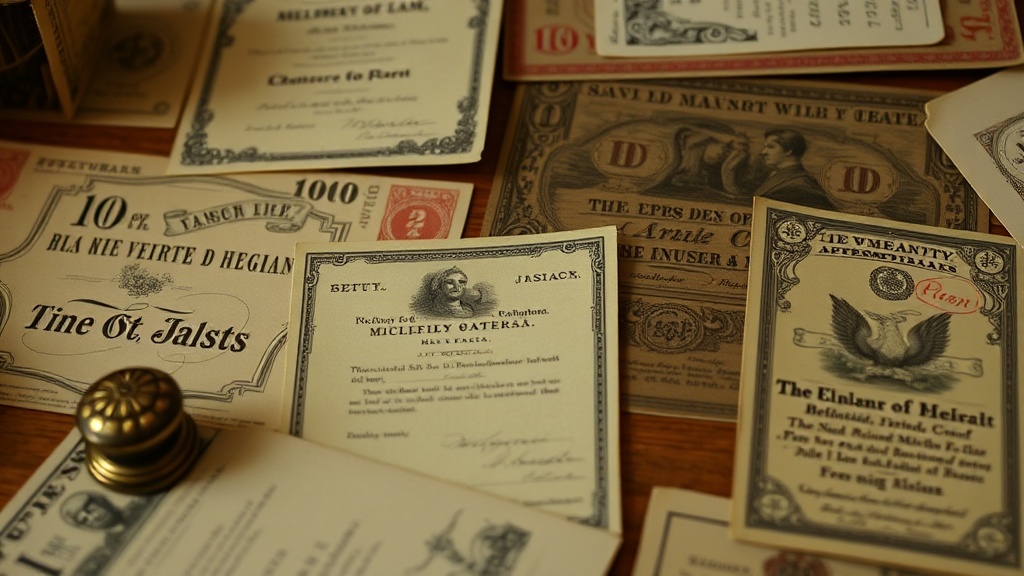
4 Rare Types of Victorian Ephemera to Watch For

Ornate Visiting Cards
Victorian Theater Programs
Hand-Colored Botanical Prints
Vintage Postcards and Stationery
The Value of the Transient: Understanding Victorian Ephemera
This article identifies four specific categories of Victorian-era ephemera—items originally intended for short-term use—that have transitioned into high-value collectibles. You will learn how to identify these items, the technical characteristics that distinguish authentic pieces from later reproductions, and the historical context that drives their market value. For the serious collector of paper and print, understanding these ephemeral artifacts is essential because they offer a granular, unpolished view of 19th-century life that formal first editions often omit.
In the world of paper collecting, "ephemera" refers to items like tickets, pamphlets, trade cards, and stationery. Unlike a leather-bound volume intended for a library shelf, these objects were often printed on cheaper, more acidic paper and discarded immediately after use. This inherent disposability is exactly what makes surviving specimens so rare and, occasionally, incredibly valuable. When you examine these pieces, you are not just looking at paper; you are examining the physical debris of a vanished social order.
1. Victorian Trade Cards and Chromolithographs
Trade cards were the primary advertising medium of the mid-to-late 19th century. These small, highly decorative cards were used by businesses to promote products, ranging from patent medicines to luxury soaps. While many were simple woodblock prints, the most sought-after specimens are high-quality chromolithographs. Chromolithography—a multi-stone color printing process—allowed for a level of vibrant, layered color that was previously impossible for mass-market advertising.
To identify a high-quality Victorian trade card, look for the depth of the ink. True chromolithographs use multiple layers of oil-based ink, which gives the image a slight tactile density and a richness that modern digital reproductions cannot mimic. Examine the edges of the color; in a genuine lithograph, the colors are often subtly layered rather than perfectly flat. Collectors should look for specific subjects that hold high demand, such as:
- Botanical and Zoological Studies: Cards featuring highly detailed, scientifically accurate depictions of flora and fauna.
- Allegorical Figures: Images of "Lady Liberty" or classical deities used to sell domestic goods.
- Niche Industry Advertisements: Early advertisements for specific technologies, such as telegraphy or steamship lines.
When inspecting these items, be aware of "foxing"—the reddish-brown spots caused by fungal growth or iron oxidation in the paper. While some foxing is expected, excessive spotting can significantly degrade the value. If you are unsure about the structural integrity of your paper, understanding why your antique paper is turning yellow can help you determine if the discoloration is natural aging or active deterioration.
2. Victorian Visiting Cards and Social Stationery
The Victorian era was defined by rigid social protocols, and the visiting card was a fundamental tool of these rituals. When a person visited a social acquaintance, they would leave a card to signal their presence and status. These were not merely pieces of paper; they were social markers. The quality of the cardstock, the intricent typography, and the presence of hand-engraved elements communicated the owner's wealth and social standing.
Collectors should look for "die-cut" cards or those with "deckle edges." Die-cutting was a process where the paper was cut into non-rectangular shapes—such as shields, hearts, or ornate scrolls—using a metal die. This required precision and added a premium to the cost of production. Additionally, look for embossing, where a design is raised from the surface of the paper. High-quality Victorian stationery often utilized letterpress printing, which leaves a slight physical indentation in the paper, a hallmark of authentic 19th-century production.
A key way to verify authenticity is to check the paper's weight and texture. Victorian-era cards often utilized heavy, high-rag-content paper. This makes them more durable than the wood-pulp-based papers that became common toward the end of the century. If the card feels excessively brittle or has a "woody" texture, it may be a later, lower-quality reproduction. Pay close attention to the typography; the fonts used in the mid-1800s were often highly ornate and specifically designed for the letterpress, featuring subtle irregularities that modern digital fonts lack.
3. Theater Programs and Broadside Posters
Broadsides and theater programs serve as a direct record of the ephemeral entertainment of the Victorian age. These items were printed on large, single sheets of paper and posted in public spaces or handed out at venues like the London Palladium or various New York playhouses. Because they were intended to be torn down or discarded after the performance, surviving copies are remarkably scarce.
For the collector, the value lies in the historical specificity. A broadside announcing a specific circus troupe or a theatrical production of a Shakespearean play provides a "witness" to the cultural zeitgeist. When evaluating these pieces, look for the following technical markers:
- Typeface Consistency: Genuine broadsides were often printed using movable type. This means you might see slight misalignments or varying depths of ink across the page, which is a sign of the mechanical printing process of the era.
- Paper Composition: Many broadsides were printed on "newsprint" or low-grade paper. This paper is highly susceptible to light and moisture. If you find a broadside in remarkably pristine condition, verify that it hasn't been artificially "aged" through chemical treatments.
- Imprint Details: Look for the printer's imprint at the bottom of the sheet. A known printer of the era can significantly increase the provenance and value of the piece.
Because these items were often displayed in public, many exhibit "street wear"—folds, creases, or slight tears. In the world of ephemera, a well-preserved broadside with original fold lines is often more desirable than a piece that has been flattened and treated, as the folds are part of the object's authentic history.
4. Victorian Apothecary Labels and Product Packaging
The 19th century saw an explosion in the production of patent medicines, tonics, and household goods. The labels used on these bottles and tins are a specialized subset of ephemera that combines graphic design with historical medical interest. These labels often feature highly decorative borders, elaborate script, and even small illustrations of the "miracle" ingredients or the supposed effects of the medicine.
Identifying high-value apothecary labels requires an eye for detail regarding the printing method and the material. Many high-end labels were printed using copperplate engraving or lithography to ensure the brand looked prestigious. A genuine Victorian label will often have a distinct "feel"—the ink may be slightly raised, or the paper may have a specific grain.
Collectors should be wary of "reproduction labels" often found on antique bottles in estate sales. These are frequently modern stickers printed to look old. To distinguish them, use a magnifying loupe to inspect the printing. A modern digital print will show a pattern of tiny dots (CMYK halftone screen), whereas a Victorian-era lithograph or engraving will show more continuous, organic lines and a more solid application of pigment. Furthermore, the adhesive on an original Victorian label will often be dried and brittle, whereas a modern reproduction will likely have a fresh, tacky residue.
When handling these items, remember that the paper is a physical witness to the history of commerce and medicine. The chemical composition of the inks and the paper can react to the environment, so proper storage is paramount. If you are dealing with items that show signs of chemical degradation, you may want to research the history of early printing to better understand the materials used during this transformative period.
Technical Summary for the Collector
Collecting Victorian ephemera requires a shift in mindset from the bibliophile to the forensic analyst. You are no longer looking for the perfection of a bound volume, but for the survival of a transient object. To succeed, you must master three specific areas of inspection:
- The Printing Method: Can you see the halftone dots of a modern printer, or the textured layers of a chromolithograph?
- The Paper Integrity: Is the paper a high-rag content characteristic of the 19th century, or a modern wood-pulp derivative?
- The Physical Evidence: Do the folds, the ink depth, and the die-cuts align with the mechanical capabilities of the Victorian era?
By applying these rigorous standards, you move beyond mere "collecting" and into the realm of historical preservation. Each piece of paper you acquire is a fragment of a larger, complex social tapestry that was once thought to be disposable, but has now become an invaluable record of human history.