The First Algorithm Was Set in Lead: Authenticating Ada Lovelace's 1843 Notes

The annual "women in tech" carousel is already spinning, right on schedule for International Women's Day, March 8, 2026. You know the format: pastel gradients, a quote card, a panel, a hashtag, and by Monday the feed has moved on.
I have no quarrel with celebration. I do have a quarrel with amnesia.
If you want the origin document, you don't start with a keynote. You start with Scientific Memoirs, Vol. III (London, Richard and John E. Taylor, 1843), where Menabrea's "Sketch of the Analytical Engine" appears as Article XXIX, pages 666-731, with Ada's notes expanding the piece into one of the earliest substantial published frameworks for programmable computation.
What the Real 1843 Artifact Looks Like
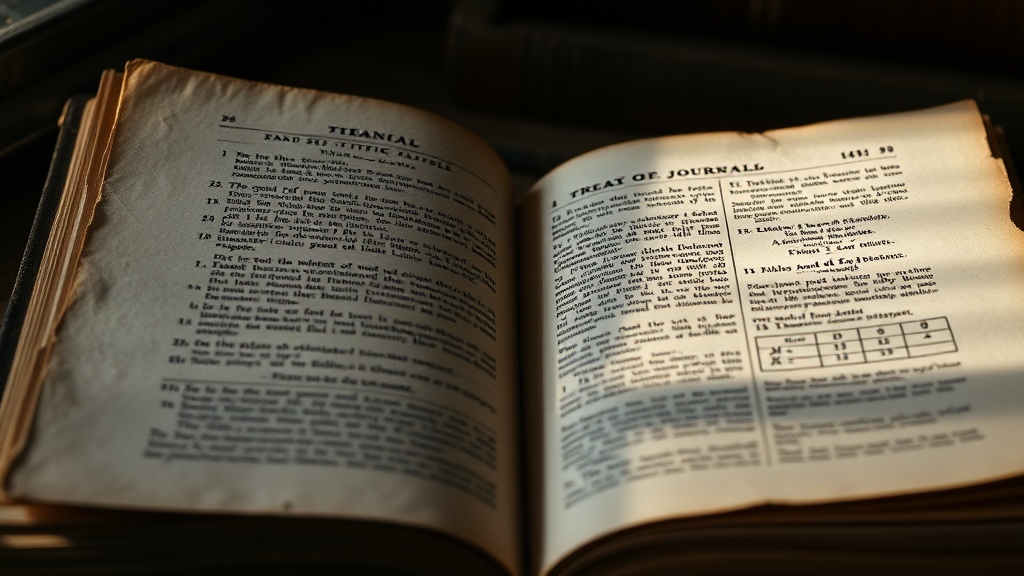
An authentic 1843 appearance in Taylor's Scientific Memoirs is not glamorous. It is usually an 8vo working-science volume, often rebound, frequently tired, with a text block that has lived a hard institutional life.
What I look for first:
- Correct placement and run: Article XXIX in Vol. III, with the Menabrea/Lovelace section running pp. 666-731.
- Period typography behavior: uneven inking, long-form scientific setting, and the kind of compositor spacing pressure you get when mathematical copy is forced through hand-set type.
- The folding material: period catalog and auction descriptions commonly note a folding table in this section. If that fold is too fresh, too white, or too mechanically precise, alarms go off.
- Paper reality: mid-19th-century scientific periodical stock is typically toned now, with brittleness at stress points, especially at folds and fore-edges.
You are not looking for a pristine "tech relic." You are looking for a survivor.
Note G Was a Printing Problem Before It Was a Myth
People now call Note G "the first algorithm." Fine. In 1843, though, it also arrived as a compositor's problem.
Today, code is elastic: revise, rerender, push. In 1843, every symbol had to be materially placed, locked, and printed. Tables that track operation order are not just conceptual breakthroughs; they are feats of production discipline. One dropped sort, one transposed number, one spacing collapse in a dense table, and the logic chain can deform on the page.
That is why this document matters as an object. The argument for early computing is not only in the prose. It is in the successful physical encoding of procedure.
Why It Seldom Appears in the Open Market
Scarcity here has layers.
First, institutional gravity. Many strong copies moved into major library and science collections long ago.
Second, format fragility. Scientific journals were read hard, shelved badly, disbound for extracts, and rebound without much sentiment. Fold-outs are usually the first casualties.
Third, market pressure. In auction and dealer descriptions over recent years, this issue is repeatedly framed as foundational to digital computing, and copies that are bibliographically complete tend to draw immediate attention.
A related trap: the separate offprint issue of the paper (also 1843) has a different rarity profile and, in some sales cycles, attracts even stronger bidding. Do not conflate "offprint first separate edition" with "journal appearance in Vol. III." They are cousins, not twins.
How to Spot a Facsimile Before It Spots You
Most expensive mistakes happen because buyers authenticate the story, not the object.
Practical tells:
- Impression quality: facsimiles often show flattened, uniformly dark text or soft photorepro fuzz, instead of crisp but slightly variable letterpress bite.
- Paper age mismatch: bright, stable paper with no period-consistent edge wear is a warning, especially when paired with theatrically artificial foxing.
- Fold-out behavior: modern reproductions of tables are often on different stock, with fold geometry that feels machine-perfect rather than historically stressed.
- Margin logic: reprint sources from microfilm or scans can carry clipped gutters, odd shadowing, or image-area artifacts inconsistent with an original printed forme.
- Binding-story mismatch: a "perfect" modern case with no plausible 19th-century or early-20th-century wear profile around hinges, spine labels, and endpaper transitions deserves hard scrutiny.
And yes, verify bibliographically before romance takes over: volume, article designation, page span, and the physical presence and condition of the table material.
Ahead of Women's Day, Handle the Evidence
If we are serious about women in tech, then we should be serious about provenance.
Ada Lovelace's contribution does not need a campaign to become real. It is already real in lead-set type, in a London science volume from 1843, where someone in a print shop had to make unfamiliar logic printable.
That is the point I want us to remember this weekend: before software had conferences, it had paper. Before "innovation" had a stage, it had collation.
And if you are lucky enough to hold a genuine copy, hold it like evidence.