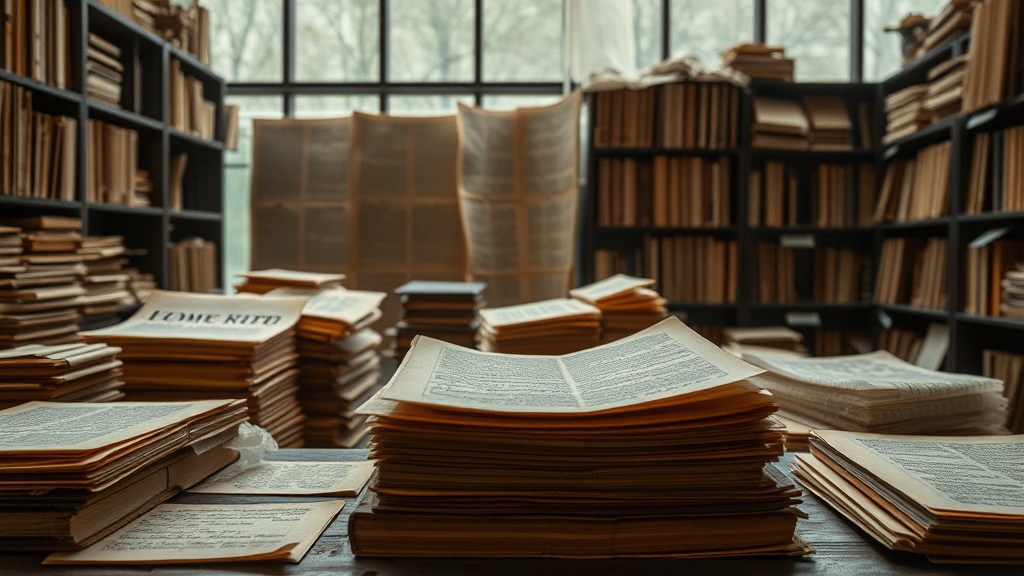
The Art of Archival Preservation: Protecting Your Rare Paper Collections

The Forensic Reality of Decay: Why Preservation is a Battle
In my previous life as an investigative journalist, I learned that every piece of evidence eventually tells a story. If you look closely enough at a crime scene, the physical state of the objects reveals the passage of time, the environmental conditions, and the negligence—or care—of those who came before. When I transitioned into the world of rare book collecting, I realized that a first edition is not merely a book; it is a physical witness to history. It is a fragile, organic entity composed of cellulose, protein, and pigment. And, like any witness, it is susceptible to being silenced by the slow, invisible forces of decay.
To the untrained eye, a book is just a book. To a collector practicing forensic-level preservation, a book is a complex biological specimen. The paper can succumb to acidity; the leather can succumb to desiccation; the glue can succumb to humidity. We are not just "storing" objects; we are managing a controlled environment to stave off the inevitable entropy of the natural world. This is the art of archival preservation—a discipline that requires the precision of a scientist and the vigilance of a detective.
The Trinity of Destruction: Light, Humidity, and Temperature
If I were to identify the three primary suspects in the "murder" of a rare collection, they would be light, humidity, and temperature. These elements do not strike with the sudden violence of a theft; instead, they work through a process of gradual attrition, slowly eroding the integrity of the fibers and the vibrancy of the pigments.
1. The Photochemical Assault: Light
Light, specifically ultraviolet (UV) radiation, is perhaps the most insidious enemy. UV rays possess enough energy to break the chemical bonds within organic materials. This leads to "sunburn" on the spine, the fading of hand-colored illustrations, and the yellowing of pages. I often tell my clients that light is a thief that steals the color of history. If you haven't already mastered the basics of light management, I highly recommend studying the golden rule of UV protection for rare books. It is not enough to simply keep books out of direct sunlight; you must understand the spectrum of light that permeates even your living spaces.
This phenomenon isn't unique to paper. In other collectible spheres, we see similar degradation patterns. For instance, collectors of vintage electronics often deal with similar light-induced damage, a concept explored in the discussion on display burn and light protocols. Whether it is a 1985 video game box or a 1920s cloth-bound first edition, the physics of light-induced degradation remain the same: energy breaks bonds.
2. The Hydrological Variable: Humidity
Water is a double-edged sword. Too little, and the organic components—leather, vellum, and even paper—become brittle and prone to cracking. Too much, and you invite the most terrifying of all archival specters: mold and foxing. Foxing, those reddish-brown spots often seen on antique paper, is frequently the result of fungal growth or the oxidation of iron particles within the paper itself, both of which are exacerbated by moisture.
Maintaining a stable relative humidity (RH) is critical. Ideally, you want to maintain a consistent level between 35% and 50%. Rapid fluctuations are often more damaging than a slightly high or low constant level, as the expansion and contraction of fibers cause structural stress. For a comprehensive overview of maintaining a stable environment, revisit my guide on the essential rules for preserving rare first editions.
3. The Thermal Constant: Temperature
Heat acts as a catalyst. It accelerates the chemical reactions that lead to acid decay and mold growth. A warm room is a fast-forward button for the aging process. In the world of high-end collecting, stability is the ultimate virtue. You are not looking for "perfect" temperature, but rather "constant" temperature. A steady 65°F (18°C) is generally considered the gold standard for most paper-based collections.
The Chemistry of the Page: Acid and pH Balance
When we examine a book under a magnifying glass, we aren't just looking for typos; we are looking for the chemical signature of its era. During the mid-19th to the mid-20th century, many publishers used wood pulp that contained high levels of lignin. Lignin is a natural component of wood, but when it breaks down, it produces acid. This acid literally eats the paper from the inside out, leading to the brittle, brown edges we often see in older editions.
To combat this, you must be meticulous about your storage materials. Never use standard cardboard boxes or cheap plastic bins to house your collection. These materials often "off-gas" acidic vapors that can migrate into your books. Instead, invest in archival-grade, acid-free, and lignin-free materials. Understanding the nuances of acid-free storage is perhaps the single most important investment a serious collector can make. It is the difference between a book that survives for another century and one that crumbles at the touch.
The Forensic Toolkit: Essential Preservation Practices
Preservation is not a passive act; it is an active, ongoing process of monitoring and intervention. To manage a collection like a professional, you should adopt the following protocols:
- The Digital Audit: Maintain a meticulous ledger of your collection. Document the condition of each book—including any existing foxing, spine lean, or edge wear—at the time of acquisition. This provides a baseline for detecting new issues.
- Controlled Handling: While the old rule of "white gloves" is debated (as they can reduce tactile sensitivity and cause tears), the principle of clean hands is absolute. Oils from your skin are acidic and can leave permanent marks on paper and cloth. Wash and dry your hands thoroughly before handling any volume.
- Shelving Geometry: Books should be shelved upright, but not too tightly. If you have to tug a book to get it out, the pressure is too high, which can damage the headcap and the spine. For larger or heavier volumes, consider using book supports or even laying them flat to prevent structural "slumping."
- Micro-Environment Monitoring: Do not rely on a wall thermometer. Purchase a high-quality hygrometer to track the specific humidity and temperature of your bookshelves. This is your "black box" recorder for your collection's health.
A Sustainable Future for the Collector
As we look toward the future, the ethics of collecting are evolving. We are no longer just curators of the past; we are stewards of the resources that allow these items to exist. The materials used in preservation—specialized plastics, treated papers, and climate-control systems—all have an environmental footprint. As a collector, it is vital to consider how your preservation methods impact the world at large. I often suggest looking into reducing your literary carbon footprint to ensure that your passion for the past doesn't come at the expense of the future.
Whether you are a collector of rare first editions, vintage diecast cars, or retro gaming hardware, the principle remains the same: Respect the object. Just as a technician might carefully clean a 72-pin connector to ensure optimal contact, a book collector must treat their collection with a reverence for its physical reality. The goal is not just to own a piece of history, but to ensure that the history remains legible for the next generation of detectives, poets, and historians.
In the end, preservation is an act of defiance. It is a way of saying that these stories, these physical witnesses, deserve to endure. Treat your collection not as a hoard of assets, but as a living, breathing archive that requires your constant, watchful eye. The evidence is in the details. Don't let the story end on your watch.