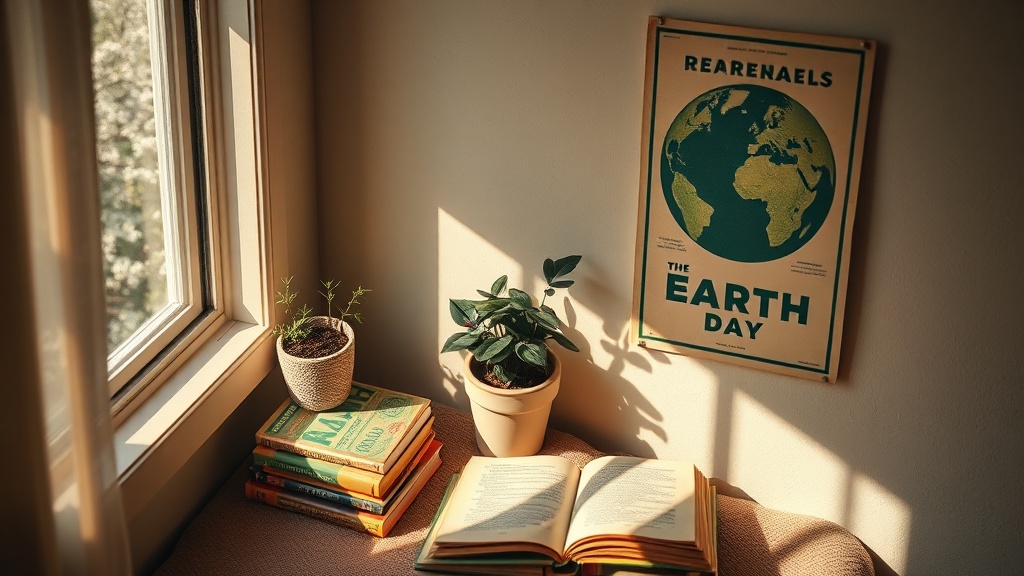
Earth Day 2026: A Collector’s Guide to Reducing Your Literary Carbon Footprint

What if your love of first editions could also protect the planet? Earth Day 2026 is just weeks away, and as a bibliographic detective I’m on the case of the literary carbon footprint. From the paper fibers in a 19th‑century binding to the miles a parcel travels, every choice leaves a trace. Below are low‑effort, forensic‑grade actions you can take today to make your collection greener.
Why does a book’s carbon footprint matter?
Recent studies show a typical paperback generates about 1 kg of CO₂‑e per copy (New Scientist, 2022). Hardcover first editions can be higher, especially when printed on non‑recycled stock and shipped long distances. As collectors, our enthusiasm can unintentionally amplify that impact.
How can I choose greener editions without compromising rarity?
When hunting for a first edition, ask yourself these forensic questions:
- Is the book printed on recycled or responsibly sourced paper?
- Does the publisher offer a green binding option (e.g., soy‑based inks, FSC‑certified cardboard)?
- Can I acquire a library‑grade copy that’s already in the public domain, reducing the need for a fresh print run?
Many rare‑book dealers now label eco‑friendly stock. When in doubt, request the paper provenance—think of it as a forensic test for sustainability.
What steps can I take to cut the carbon cost of shipping?
Shipping is often the biggest hidden emitter. A single trans‑Atlantic parcel can add up to 2‑3 kg CO₂‑e (Climate in Emergency, 2016). Here’s how to shrink that number:
- Consolidate orders. Bundle multiple acquisitions into one shipment; the per‑book emissions drop dramatically.
- Choose carbon‑neutral carriers. Services like DHL’s GoGreen or UPS’s Carbon Neutral program offset emissions for a small fee.
- Prefer ground over air. When the seller is within the same continent, select ground freight—even if it takes a few extra days.
- Reuse packaging. Repurpose sturdy boxes and padded mailers from previous sales; less waste, fewer resources.
Can digital tools help me read sustainably?
While a first edition’s tactile allure is irreplaceable, many titles have digital facsimiles available through libraries or subscription services. Use digital lending for research or casual reading, reserving the physical copy for display and deep study.
How do I make my storage greener?
Traditional archival boxes are often plastic. Switch to acid‑free, recycled‑paper boxes (UNEP, 2023). Pair them with a low‑energy digital hygrometer to monitor temperature and humidity—no need for power‑hungry climate cabinets.
What simple habits can I adopt today?
- Read in natural light. Avoid LED lamps that stay on for hours; a sunny window reduces electricity use.
- Dust responsibly. Use a soft brush rather than a vacuum that creates static.
- Share responsibly. Host a “book swap” with fellow collectors instead of buying new copies; it keeps books in circulation and cuts production emissions.
What’s the next step after Earth Day?
Make Earth Day the launchpad for an annual “Literary Green Audit”—a quick checklist (see my Forensic Care Checklist) that adds a sustainability column to every acquisition record.
By treating each book as a physical witness not only to literary history but also to our environmental impact, we can preserve stories while protecting the world they were written in.
Takeaway
Start today: verify paper sources, consolidate shipments, and switch to recycled storage. Your collection will stay pristine, and your carbon footprint will shrink—one page at a time.