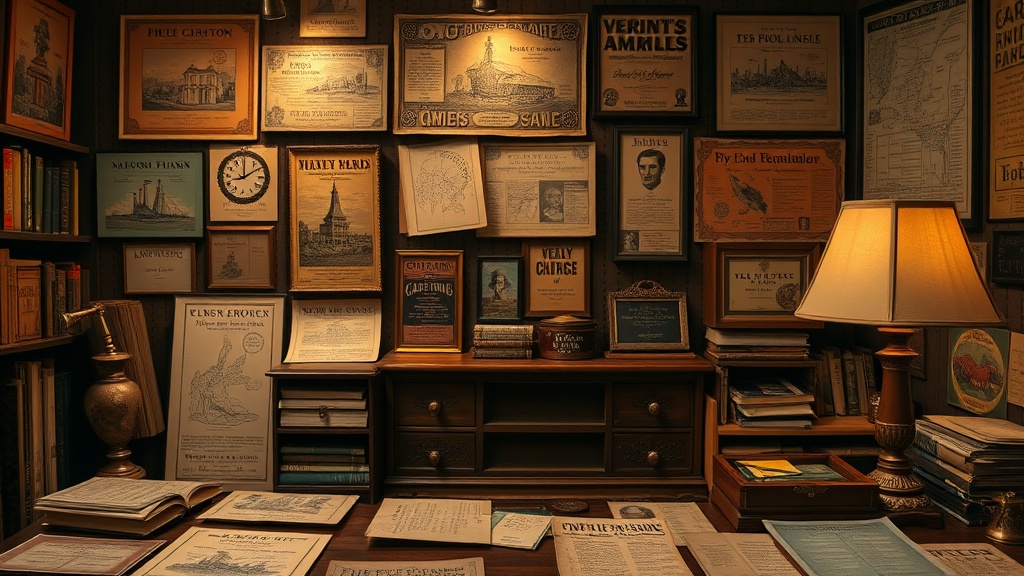
Hidden Gems: 4 Rare Ephemera Types Every Paper Collector Should Seek

Vintage Postcards and Correspondence
Historical Broadside Ballads
Antique Trade Cards and Advertisements
Rare Event Tickets and Programs
The Fragility of the Moment
An estimated 90% of all paper produced during the Industrial Revolution was manufactured using wood pulp containing high levels of lignin, a substance that causes paper to turn brittle and acidic within decades. This inherent instability is precisely why ephemera—items designed to be used and then discarded—represents one of the most challenging, yet rewarding, frontiers in paper collecting. While a first edition novel is built to endure, ephemera is a transient witness. It is the "disposable" evidence of a specific Tuesday in 1894, a fleeting fragment of a world that was never intended to be preserved.
Collecting ephemera requires a different set of forensic tools than collecting bound volumes. You are not looking for the stability of a leather binding; you are hunting for the ghost of a moment. To the untrained eye, a scrap of paper is trash. To the disciplined collector, it is a primary source document that provides a granular view of history that formal literature often obscures. This guide identifies four specific categories of rare ephemera that offer profound historical value and significant investment potential.
1. Victorian and Edwardian Trade Cards
During the late 19th century, the rise of mass-produced lithography transformed the way businesses communicated with the public. Trade cards—small, highly decorative cards used to advertise products ranging from soaps to circus acts—became a cultural phenomenon. These are not merely advertisements; they are masterworks of chromolithography, a process involving multiple layers of color ink to create a vibrant, almost three-dimensional effect.
When scouting for high-value trade cards, look for "scraps" or "die-cut" cards. These were often used in scrapbooking or as part of greeting cards. The most sought-after pieces feature intricate botanical illustrations, mythological figures, or highly detailed depictions of local commerce. For instance, a 1880s trade card for a specific apothecary in London or a high-end confectionery in New York carries more weight than a generic card, as it provides a localized historical footprint.
What to look for in the field:
- Color Saturation: High-quality chromolithography should show deep, saturated hues without the "bleeding" often seen in cheaper, later imitations.
- Edge Integrity: Because these were often handled or pasted into albums, find specimens with crisp, un-frayed edges.
- Subject Matter: Seek out "niche" themes such as early steamship advertisements, exotic animals, or celestial motifs, which tend to hold value better than generic floral patterns.
Because these items are often printed on thinner, more acidic cardstock, they are exceptionally vulnerable to environmental degradation. Before adding these to your collection, ensure you understand the art of archival preservation to prevent the colors from fading or the stock from becoming brittle.
2. Mid-Century Ephemera: The Golden Age of Graphic Design
The period between 1940 and 1960 represents a seismic shift in graphic design, moving from the ornate flourishes of the Victorian era to the bold, minimalist, and often surreal aesthetics of Mid-Century Modernism. This era produced a wealth of high-quality ephemera that is currently seeing a resurgence in value among collectors of design history.
Key items in this category include airline menus, hotel stationery, and high-end restaurant menus from the "Jet Age." A menu from a Pan Am flight in the 1950s is more than a list of food; it is a document of a specific era of luxury and technological optimism. These items often utilize experimental typography and avant-garde layouts that were pioneered by designers of the time. Collectors should focus on items that showcase the transition from Art Deco to Mid-Century Modernism.
Specific Categories to Track:
- Travel Ephemera: Menus, boarding passes, and luggage tags from defunct airlines or luxury ocean liners.
- Cinema Ephemera: Original movie programs, lobby cards, and ticket stubs from the 1940s and 50s, particularly those featuring iconic starlets.
- Product Packaging: Original tin lithograph boxes for tea, spices, or cosmetics, which serve as three-dimensional ephemera.
The vibrant inks used in mid-century printing are particularly sensitive to light. Even a few months of improper display can lead to irreversible pigment loss. To maintain the visual integrity of these pieces, you must strictly adhere to the golden rule of UV protection, ensuring that any display or storage method shields the paper from the destructive power of the sun.
3. Political and Social Pamphlets
If a first edition book is a curated statement, a political pamphlet is a raw, unedited scream. Pamphlets are the "street-level" documents of history. They are often printed on low-grade paper, in small batches, and distributed during moments of intense social friction. This makes them incredibly rare, as most were discarded immediately after their political utility expired.
The value in political ephemera lies in its proximity to the event. A pamphlet distributed during the Suffragette movement in the UK, or a piece of underground literature from the 1960s civil rights era, serves as a direct physical link to the activists of the time. These items often feature provocative woodcut illustrations or hand-set type that reflects the urgency of the message.
The Collector's Checklist for Pamphlets:
- Provenance: While difficult to establish for such small items, any connection to a specific movement or historical figure increases value exponentially.
- Typographic Characterism: Look for the "roughness" of the print. The imperfections in the ink coverage or the slightly misaligned type are often markers of authentic, period-correct printing presses.
- Materiality: Note the weight and texture of the paper. Genuine historical pamphlets often use much coarser, less refined paper than modern reproductions.
4. Broadside Posters and Handbills
A broadside is a large sheet of paper printed on one side, intended to be posted in a public space. Unlike a book, which is a private experience, a broadside is a public declaration. Historically, these were used for everything from announcing theatrical performances and circus arrivals to proclaiming legal notices or bounties. They are the "social media feeds" of the 18th and 19th centuries.
Broadsides are prized for their scale and their ability to command a room. A well-preserved 18th-century broadside advertising a duel or a public execution is a striking piece of history. Because they were meant to be pasted onto walls or wooden posts, finding a "clean" specimen without mounting residue or heavy foxing is a rare achievement. Collectors should look for broadsides that feature woodblock or copperplate engravings, as these are often more visually striking and historically significant.
Technical Considerations for Broadside Collectors:
Because broadsides are often large and single-sheet, they present unique structural challenges. They are prone to creasing, tearing, and "cockling" (the waving of the paper due to humidity). When handling these, never use your bare hands; the oils from your skin can leave permanent marks on the paper fibers. Instead, use archival-grade tweezers or wear lint-free cotton gloves. Furthermore, if you intend to frame a broadside, you must use acid-free storage solutions and professional-grade mounting techniques to ensure the paper does not succumb to "acid burn" from the frame or the backing material.
"The ephemeral is the most honest form of history. It does not seek to be eternal; it only seeks to be heard in the moment. To collect it is to catch a falling star."
Collecting ephemera requires a shift in mindset. You are no longer looking for the permanence of the library, but the vitality of the street, the cafe, and the political rally. By focusing on these four categories—Victorian trade cards, Mid-Century design, political pamphlets, and broadsides—you can build a collection that is not just a set of objects, but a vivid, tactile map of human experience.