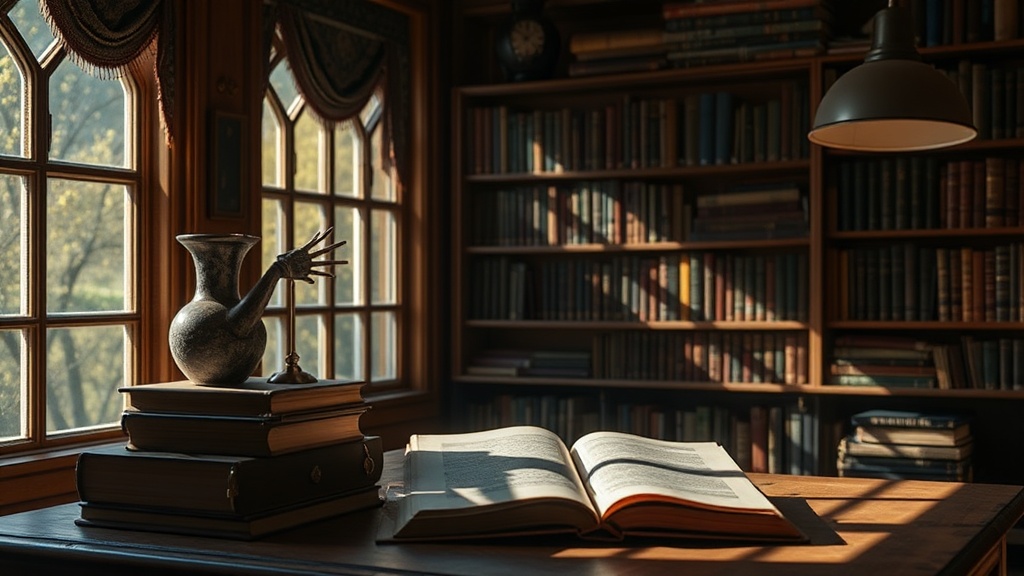
5 Essential Rules for Protecting Your Rare First Editions from Sunlight

The Dangers of Direct Sunlight
Utilizing UV-Protective Glass
Optimal Lighting Temperatures
Strategic Shelf Placement
The Role of Indirect Natural Light
I have spent much of my career looking for clues. As an investigative journalist, I looked for the missing link in a paper trail; as a book expert, I look for the microscopic fractures in a spine or the subtle fading of a gilt edge. To the untrained eye, a book sitting on a sunny windowsill is merely a beautiful object. To the collector, it is a victim in progress. Sunlight is not merely light; it is a slow-motion bombardment of high-energy photons that systematically dismantles the molecular structure of paper, ink, and cloth.
When I examine a first edition, I am performing a forensic audit of its survival. I look at the pigment in the endpapers and the integrity of the cloth binding. If those elements have been compromised by light exposure, the book's historical value—and its physical life—is truncated. Photodegradation is a silent thief. It doesn't strike with the sudden violence of a flood or the invasive creep of mold, but it is just as terminal. It bleaches the soul out of a binding and turns supple pages into brittle, yellowed relics.
To protect your investment, you must move beyond basic awareness and into the realm of proactive mitigation. Below are the five essential rules for shielding your rare first editions from the destructive power of light.
1. Master the Physics of UV Radiation
The primary culprit in the degradation of your collection is Ultraviolet (UV) radiation. While visible light allows us to read the text, UV light possesses enough energy to break the chemical bonds within organic materials. This process, known as photodegradation, affects the cellulose fibers in paper and the organic dyes used in cloth bindings. If you see a spine that has turned a pale, sickly version of its original hue, you are looking at the aftermath of a UV assault.
You cannot simply rely on "dim lighting." Even indirect sunlight can carry a significant UV load. To truly safeguard a collection, you must understand the golden rule of UV protection for rare books, which involves filtering the light before it ever touches the object. This means moving beyond standard window treatments and looking toward specialized solutions.
Actionable Advice:
- Install UV-Filtering Films: Apply museum-grade UV-blocking films to all windows in your library or study. These films can strip away up to 99% of harmful rays without significantly altering the natural aesthetic of the room.
- Use LED Lighting: Traditional incandescent and even some fluorescent bulbs emit small amounts of UV radiation. Transitioning to high-quality, UV-free LED lighting is a non-negotiable step for the modern collector.
- Monitor the Spectrum: If you are serious about your curation, invest in a handheld UV meter to check the "hot spots" in your room.
2. Implement the "Dark Storage" Protocol
The most effective way to fight light is to deny it access. In the world of high-end archiving, the gold standard is dark storage. A book that is constantly on display is a book that is constantly dying. While the desire to showcase a prized first edition—perhaps a stunning cloth-bound volume from the early 20th century—is understandable, constant exposure is a death sentence for the binding.
I often tell my clients that a library should be a sanctuary, not a showroom. If you must display books, do so rotationally. A book should spend the majority of its life in a controlled, dark environment, emerging only for brief periods of exhibition. This principle of preservation is shared across many disciplines; for instance, collectors of delicate textiles must also be wary of light exposure, much like the art of preserving vintage silk scarves, where light can cause irreversible color loss.
Actionable Advice:
- The 80/20 Rule: Keep 80% of your collection in closed, dark storage (such as a dedicated bookshelf with doors) and only display 20% at any given time.
- Use Book Boxes: For your most precious first editions, utilize archival-quality clamshell boxes (also known as Solander boxes). These provide a secondary layer of defense against both light and environmental fluctuations.
- Avoid Open Shelving in High-Traffic Areas: Avoid placing bookshelves opposite windows or in paths where natural light shifts throughout the day.
3. Control the Secondary Effects: Heat and Humidity
Light and heat are inextricably linked. When light hits a surface, it converts to thermal energy. This localized heating can cause the paper to expand and contract, leading to warping and "cockling." Furthermore, heat accelerates the chemical reactions that cause acidification in paper. If your room is bright, it is likely also warm, and that warmth is working in tandem with the light to destroy your collection.
This synergy of destruction is a common theme in many collectible categories. Just as collectors of electronic memorabilia must contend with display burn and humidity protocols to prevent damage to plastic and ink, book collectors must manage the micro-climate surrounding their volumes. A bright, hot room is a recipe for a brittle, damaged library.
Actionable Advice:
- Maintain Constant Temperatures: Aim for a stable temperature between 65°F and 70°F (18°C–21°C). Fluctuations are often more damaging than a constant, slightly higher temperature.
- Dehumidify Your Space: Keep relative humidity (RH) between 35% and 50%. High humidity combined with light exposure can lead to rapid mold growth and the breakdown of adhesives.
- Avoid Heat Sources: Never store books near radiators, fireplaces, or electronic equipment that generates heat.
4. Audit Your Display Methods
If you choose to display a first edition, you must do so with a forensic mindset. The method of display can either mitigate or exacerbate light damage. For example, a book standing upright on a shelf is more vulnerable to light than a book lying flat, as the spine—the most visually striking and often most fragile part—is directly exposed to the room's ambient light.
When I am conducting an audit of a private collection, I look closely at the orientation of the books. A book displayed face-out on a pedestal is a high-risk item. It is a beautiful way to show off a masterpiece, but it is also a way to invite the slow decay of the cover art. To minimize this, consider the material of your display surfaces. Reflective surfaces, such as glass or polished metal, can bounce light back onto the book from unexpected angles.
Actionable Advice:
- Rotate Your Displays: If you have a "star" volume, do not leave it on display for more than a few weeks at a time. Change the centerpiece of your collection regularly to give the previous volume a "rest" in the dark.
- Use Non-Reflective Glass: If you use a glass-fronted cabinet, ensure the glass is "museum glass" or anti-reflective. This reduces the amount of light bouncing around the interior of the cabinet.
- Avoid Direct Sightlines: Position your display cases so they are not in the direct line of sight of any windows or light-emitting objects.
5. Integrate Preservation into Your Lifestyle
True collecting is not just about the acquisition; it is about the stewardship. As we move through a decade increasingly defined by environmental awareness, the way we care for our physical objects reflects our broader values. Whether you are protecting a rare 1925 edition of The Great Gatsby or managing the footprint of your entire library, preservation is an act of respect for the past.
As you refine your storage and display techniques, consider how your collection interacts with the world around you. Many collectors are now looking at how to balance the preservation of physical history with modern sustainability. Understanding how to reduce waste and manage resources is part of a holistic approach to being a responsible collector, a sentiment echoed in guides regarding reducing your literary carbon footprint.
Actionable Advice:
- Build a Maintenance Calendar: Don't just buy books; schedule time to inspect them. Once every six months, check your collection for signs of light fading or paper brittleness.
- Invest in Quality Over Quantity: It is better to own five perfectly preserved first editions than fifty poorly maintained ones. The quality of your storage dictates the longevity of your legacy.
- Document Everything: Keep a detailed log of your books, including their condition at the time of purchase. This helps you track if light damage is occurring over time.
In my years of hunting through dusty archives and high-end auction houses, I have learned one universal truth: the most expensive book in the world is worthless if it is not preserved. Light is a slow, patient predator. By implementing these five rules, you are not just protecting a piece of paper and cloth; you are defending a witness to history. Treat your library not as a static collection, but as a living, breathing entity that requires your vigilant, forensic care.