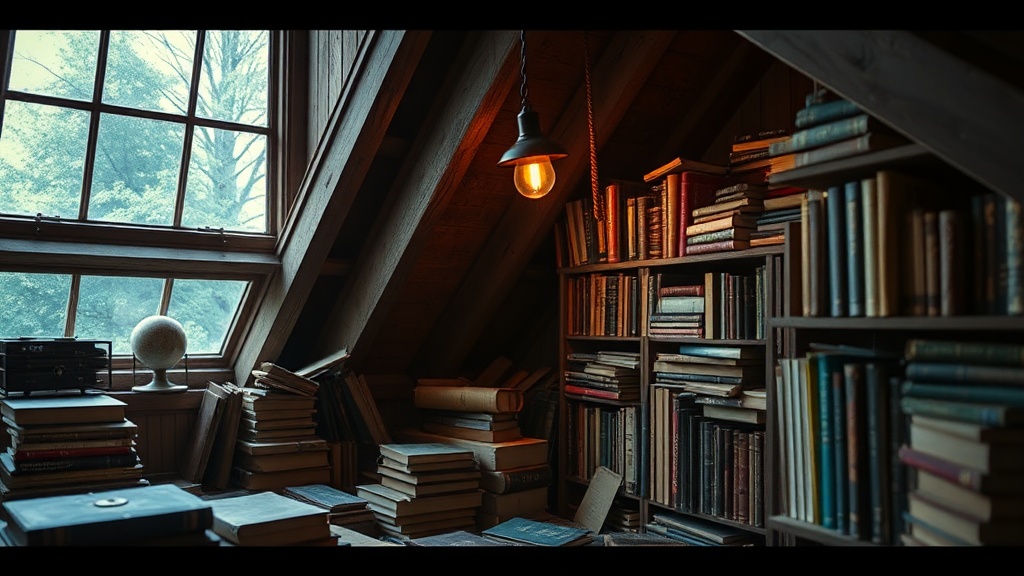
Why You Should Not Store Your Books in the Attic

Many collectors believe that the attic is a safe, neutral zone for long-term storage, assuming that because the books are "out of sight," they are "out of mind." This is a dangerous misconception. An attic is not a static environment; it is a volatile microclimate characterized by extreme thermal fluctuations and high humidity levels. If you are storing first editions, rare manuscripts, or high-value paper ephemera in an attic, you are essentially placing your collection in a slow-motion kiln. This post details the specific chemical and physical processes that destroy paper and leather, and provides the technical standards required to preserve your collection properly.
The Physics of Thermal Fluctuation
The primary threat in an attic is not just heat, but the oscillation of temperature. Most residential attics suffer from a phenomenon known as "thermal cycling." During the day, solar radiation heats the roof structure, driving temperatures well above 100°F (38°C). At night, the temperature drops sharply. This constant expansion and contraction act as a physical stressor on the organic components of a book.
When a book undergoes thermal cycling, the different materials within the binding react at different rates. The leather of a spine might expand more rapidly than the heavy buckram of the boards, or the glue in a tight binding might become brittle and crack. This leads to "cockling," where the pages begin to wave and ripple because the cellulose fibers are being physically agitated by the changing air volume between them. For a collector of fine bindings, this structural deformation is often irreversible.
The Impact on Adhesives and Bindings
Modern books use synthetic adhesives, but many antique volumes rely on animal glues or starch pastes. These organic adhesives are highly sensitive to heat. In an attic environment, heat can cause these glues to "melt" or lose their grip, leading to detached endpapers or falling spines. Furthermore, high temperatures accelerate the off-gassing of acidic components within the paper itself. This process, known as acid hydrolysis, breaks down the molecular chains of the cellulose, turning the paper yellow, brittle, and eventually prone to crumbling upon touch.
Humidity and the Biological Threat
If heat is the slow killer, humidity is the rapid executioner. Attics are notorious for poor ventilation, which allows moisture to become trapped. This creates two distinct problems: hygroscopic stress and biological infestation.
The Role of Relative Humidity (RH)
Paper is hygroscopic, meaning it naturally absorbs and releases moisture from the air to reach equilibrium. In an attic, the Relative Humidity (RH) can spike during summer months or heavy rain. When the RH exceeds 60%, the paper fibers swell. When the air dries out, they shrink. This constant movement weakens the structural integrity of the book. If you are storing items like delicate maps or loose ephemera, you must be even more vigilant, as these items lack the structural support of a hard binding and are more prone to warping. You should consider using acid-free sleeves for ephemera to provide a minor buffer against these environmental shifts.
Mold and Fungal Growth
High humidity is the primary catalyst for mold spores. Even if you cannot see the mold immediately, a high-moisture environment in an attic provides the perfect breeding ground for Aspergillus or Penicillium. Once mold takes hold on the surface of a book, it begins to digest the organic materials—the glue, the leather, and even the paper itself. Mold is not just an aesthetic issue; it is a biological attack that can spread from one volume to another through shared air currents. Once a collection is contaminated with mold, the remediation process is incredibly difficult and often requires professional archival intervention.
The Danger of Pest Infestation
Attics are high-traffic zones for various pests, including silverfish, booklice (psocids), and various species of beetles. These insects do not merely inhabit the space; they feed on the very materials that make your collection valuable. Silverfish, for example, are particularly attracted to the starch used in book bindings and the sizing in high-quality paper. They can strip the gold leaf from a spine or eat through the margins of a page in a matter than a collector might realize.
Because attics are often poorly monitored, a pest infestation can go undetected for months. By the time you descend the ladder to check your collection, the damage is often systemic. Unlike a controlled library environment, an attic offers no defense against these biological agents, making it a high-risk zone for any significant investment in paper and print.
The Proper Standards for Book Storage
To preserve the value and physical integrity of your collection, you must move away from "storage" and toward "curation." A professional-grade environment requires control over three specific variables: temperature, humidity, and light.
- Temperature Control: Aim for a consistent temperature between 65°F and 70°F (18°C to 21°C). The key is stability. Avoid any room that experiences more than a 5-degree fluctuation in a 24-hour period.
- Humidity Regulation: Maintain a Relative Humidity (RH) of 35% to 50%. If you live in a humid climate, a high-quality dehumidifier is a mandatory tool. If you live in an arid climate, a humidifier may be necessary to prevent the leather from drying out and cracking.
- Air Circulation: Books need to "breathe," but they should not be in a drafty area. Ensure there is enough space between volumes on a shelf to allow air to move, but avoid placing them near HVAC vents where direct air blasts can cause localized temperature spikes.
Selecting the Right Shelving and Containers
When setting up a proper storage area, the materials you use are just as important as the room itself. Avoid using wooden shelves that are untreated, as the tannins and acids in certain woods can leach into the books. Instead, use powder-coated metal shelving or high-quality, archival-grade plastics. If you must use wooden shelves, ensure they are finished with a non-reactive sealant.
For extremely rare items, such as first editions with delicate dust jackets or fragile paper, consider using archival-grade boxes. These boxes act as a secondary microclimate, buffering the item against minor fluctuations in the room's environment. This is particularly important for items that are sensitive to sunlight and UV degradation, as the box provides an extra layer of physical protection.
Practical Checklist for Moving Your Collection
If you are currently moving your books out of an attic or a garage, do not simply move them from one bad environment to another. Follow these steps to ensure a safe transition:
- Inspect Every Volume: Before moving a book, check for signs of "foxing" (brown spots), mold, or insect exit holes. If a book shows signs of infestation, isolate it immediately in a sealed plastic bin to prevent spreading the issue to the rest of your collection.
- Clean Before Storing: Ensure that no dust or debris is trapped within the pages. Dust is abrasive and can hold moisture against the paper. Refer to our guide on cleaning dust from antique book spines to ensure you are using safe, non-invasive methods.
- Avoid Vertical Stacking: Never stack heavy books horizontally for long periods, as this compresses the binding and can cause structural failure. Books should ideally stand upright, supported by sturdy bookends to prevent leaning.
- Use Acid-Free Materials: Any dividers, wraps, or boxes used during the move must be acid-free and lignin-free. Standard cardboard is highly acidic and will eventually discolor your books.
Treating your collection with the rigor of a forensic scientist ensures that these physical witnesses to history survive for the next generation. An attic is a graveyard for paper; a controlled, stable environment is a sanctuary.