
The One Test That Separates a True First Edition from a Beautiful Lie

Quick Tip
If the internal points and external elements of a book do not align perfectly, it is not a true first edition—walk away.
The specimen arrives under poor lighting, which is how most lies prefer to be seen.
A dealer—well-meaning, perhaps—slides it across the table. "First edition," he says. The jacket gleams. The boards are clean. The price suggests confidence.
But something is off. Not visibly. Not yet. The kind of wrongness that lives in the margins of perception—the place where the truth usually hides.
This is where most collectors fail. They trust the surface. They trust the story. They trust the seller.
They do not perform the one test that matters.

The Single Test: Alignment of Truth
Forget the checklists for a moment. Ignore the online guides, the forums, the breathless auction listings.
The one test that separates a true first edition from a sophisticated imposter is this:
Do the internal points and the external claims align perfectly—without strain, without contradiction, without explanation?
Alignment. Not approximation. Not "close enough." Alignment.
A true first state is a closed system. Every detail supports every other detail. The copyright page, the jacket price, the typography, the paper stock—they tell the same story in unison.
A lie requires explanation.
("The jacket might be from another copy." "The publisher changed this mid-run." "It's an early printing, basically the same.")
No. The bibliography never lies. People do.

Case Study: The Beautiful Mismatch
Let’s examine a common crime scene.
The book: Clean, tight, correct publisher on the title page. Copyright page lists the proper date. No additional printings stated. Promising.
The jacket: Bright. Unclipped. Visually perfect.
The problem? The price on the jacket corresponds to a later state—one issued months after the true first.
This is what we call a "marriage." A book and jacket that met long after birth, joined for convenience rather than truth.
To the untrained eye, she’s stunning.
To the trained one, she’s a fabrication.
The alignment test fails immediately. The internal evidence (first printing book) contradicts the external evidence (later-state jacket). The specimen cannot testify consistently.
Verdict: A beautiful lie.
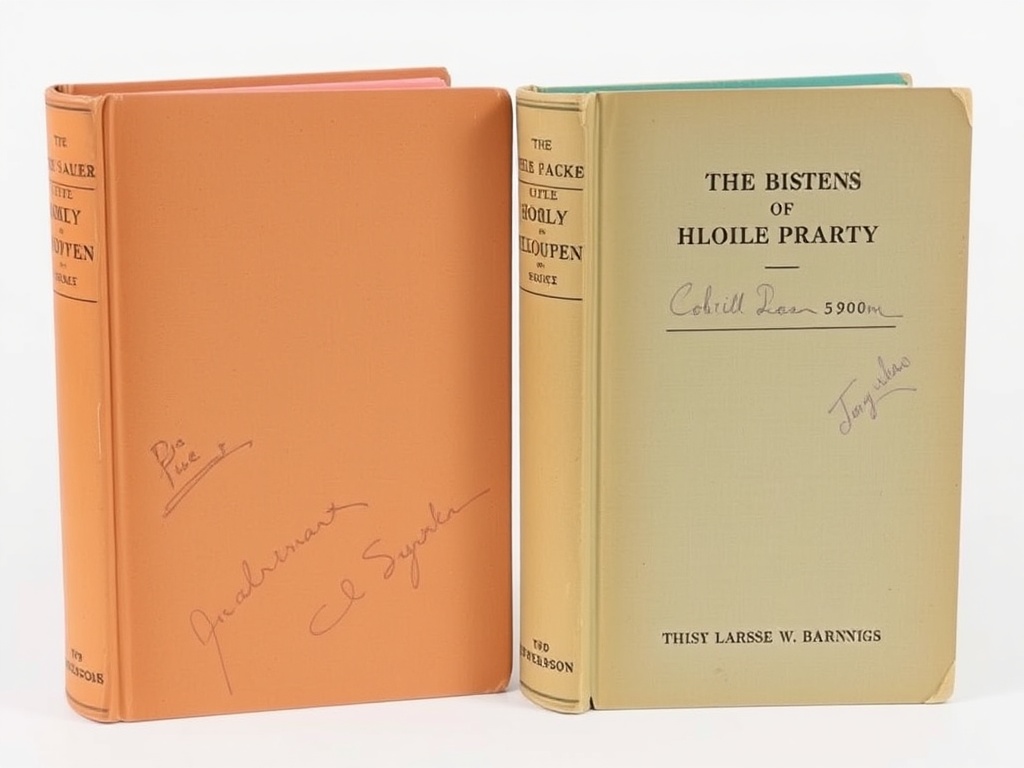
Where to Look First (When Time Is Short)
You’re in the field. Estate sale. Poor lighting. Fifteen minutes before someone else notices what you’re holding.
You don’t have time for a full bibliographic autopsy.
So you test alignment quickly—like a field agent checking a passport.
- Copyright Page vs. Title Page: Dates and publisher statements must agree without caveat.
- Dust Jacket Price vs. Known First State Price: Even a $1 discrepancy can collapse the entire claim.
- Typography Consistency: Fonts, spacing, and known errors must match documented first state points (referring, of course, to the publisher’s initial typesetting batch).
- Paper & Feel: Early printings often carry a distinct weight and texture—later runs feel cheaper, thinner, rushed.
If one element hesitates, the entire story collapses.
Truth does not hesitate.

The Smell Test (Yes, Literally)
I have said this before, and I will continue to say it until the digital crowd stops laughing: smell the book.
A true first edition—untampered, unrestored—carries a coherent olfactory profile. Paper, glue, cloth—all aging at the same rate.
A marriage copy often betrays itself here.
The jacket smells different from the boards. One carries basement musk; the other smells suspiciously neutral, as if introduced decades later from a cleaner environment.
This is not romanticism. This is data.
(Active mold, of course, is a death sentence—walk away regardless of state.)

Why Most Collectors Fail This Test
Because they are trained—by the market, by online noise—to look for confirmation, not contradiction.
They want the book to be real.
So when something doesn’t align, they rationalize it away.
They accept the explanation instead of rejecting the inconsistency.
This is how you end up paying four figures for a two-hundred-dollar artifact.
The market feeds on optimism. The bibliography feeds on evidence.

The Discipline of Refusal
The real skill is not identification. It is refusal.
The ability to say: "No. Something here does not align."
And then to walk away.
I have left behind books that would make lesser collectors salivate—because a single point hesitated under scrutiny.
Weeks later, the truth emerged. It always does.
The ones you regret are not the books you passed on.
They are the ones you justified.

Verdict
The alignment test is not glamorous. It does not photograph well. It will not make you popular at auctions.
But it will keep your collection honest.
And in this trade, honesty compounds faster than hype.
If the story requires explanation, it isn’t a first state. It’s a negotiation.
And we do not negotiate with the truth.
Happy hunting.