The Nose Knows: A Forensic Guide to Olfactory Bibliography

(Written at 2:47 AM, Providence. The Laphroaig is neat; the spectacles are polished.)
The specimen sat before me in a cardboard box at a Pawtucket estate sale, its jacket surprisingly bright for a 1934 printing. The dealer—a young man who smelled faintly of vape pen and ambition—assured me it was "pristine, bro. Never read." The price was insultingly low. I should have been reaching for my wallet.
Instead, I reached for the book.
I brought it to my nose. Three shallow inhalations—never deep when mold is suspected. The scent was wrong. Beneath the faint chemical vanilla of "old book smell" (more on that fraud later), there was something acrid. Sharp. The unmistakable signature of active mold spores doing their slow, inexorable work on the sizing of the rag paper.
I returned it to the box. The dealer looked confused. "Something wrong with it?"
"Only everything," I said, and walked away.
This is the power of olfactory bibliography—the forensic art of smelling a book to determine its condition, its provenance, and sometimes, its authenticity. The nose knows what the eye cannot see. Let me teach you to trust yours.
The Science of the Scent
A book is not merely paper and thread; it is an ecosystem of organic compounds. The paper (cotton rag, wood pulp, or the dreaded groundwood), the adhesives (animal glue, starch paste), the leather (tanned with oak bark or chromium salts), the cloth (linen, buckram, rayon)—all of these break down over time, releasing volatile organic compounds (VOCs) into the air trapped within the pages.
Your nose contains approximately 400 scent receptors capable of detecting these VOCs in parts per billion. No spectacles—however silver-framed—can match this sensitivity. The human olfactory system can distinguish between "healthy age" and "active decay" with startling accuracy, once trained.
(The training, of course, requires exposure. You must smell hundreds of specimens—good, bad, and catastrophic—before your nose becomes a reliable instrument.)
The Scent Categories: A Field Guide
Through five years in the Manhattan trenches and a decade in my Providence archive, I have categorized book scents into three forensic classes: Acceptable, Concerning, and Fatal.
ACCEPTABLE: The Patina of Time
Basement Musk: A faint, earthy aroma suggesting the book has lived in a below-grade environment for decades. Not ideal—basements are humid—but not necessarily damning. The scent is organic, loamy, reminiscent of turned soil after rain. If the pages show no foxing and the hinges are sound, this specimen is likely salvageable with proper dehumidification.
Library Dust: The dry, papery scent of a book that has sat undisturbed on a shelf in a heated, dry environment. Often accompanied by slightly yellowed page edges but clean gutters. This is the smell of benign neglect—the best kind.
Tobacco Ghost: The lingering, sweet-tar signature of a book that lived in a smoker's library. The scent clings to the cloth and the page edges. It rarely damages the paper itself, though it may depress value in the pristine market. I find it rather romantic—evidence of previous stewardship.
CONCERNING: The Warning Signs
Cathedral Damp: A heavy, mineral scent suggesting proximity to stone walls and poor air circulation. Often accompanied by tide lines (water staining) and a stiffness in the pages. This book has been cold and damp but not necessarily wet. Inspect carefully for foxing and mold blooms.
Chemical Vanilla: The "old book smell" that the uninitiated romanticize. This is often not age—it is the off-gassing of lignin in cheap wood-pulp paper breaking down. Books with this scent were likely printed after 1850 on mass-produced stock. The scent is sweet, cloying, and indicates inherent vice—the paper is slowly destroying itself through acid hydrolysis.
Sunlight Scorched: A dry, brittle scent suggesting the book lived in direct sun. The pages may be warped, the spine faded. The smell is hot, almost toasted. The paper fibers have been damaged by UV radiation. Handle with extreme care; the pages may crack.
FATAL: Walk Away
Active Mold: The acrid, sharp, penetrating scent I detected in Pawtucket. It smells wrong—biologically wrong—like a damp basement after a flood, but concentrated. If you detect this, do not inhale deeply. Mold spores can colonize your lungs as easily as they colonize rag paper. Return the book to its box and sanitize your hands. This specimen is a vector, not an acquisition.
Rodentia: A faint ammonia undertone suggesting mice or rats have made contact. Look for chewed corners and staining. This is not merely disgusting—it is a biohazard. The book is compromised.
Sophisticated Chemicals: The sharp, industrial scent of recent intervention—bleach, mold remediation sprays, or the cloying perfume of "book deodorizer" products. A book that smells like a hotel lobby is a book that has been "treated." The treatment may have stabilized it, or it may be hiding something worse. Inspect with suspicion.
The Technique: How to Smell a Book Properly
There is a method to this, as with all forensic examination.
- Open the book to the center gathering—roughly the middle pages. This is where air circulation is poorest and scents concentrate.
- Hold it 6-8 inches from your face. Never press your nose directly to the page; if mold is present, you want distance.
- Inhale shallowly through the nose, three times. The first inhalation clears your receptors. The second and third provide the analysis.
- Note the dominant scent, then search for undertones. A book that smells primarily of "old paper" but carries a faint sharpness beneath—that sharpness is the tell.
- Check the gutter—the inner margin where pages meet the spine. This is where mold blooms first and where the adhesive scents are strongest.
(If you detect anything in the Fatal category, seal the book in a plastic bag before transporting it—if you transport it at all. I recommend you do not.)
Case Study: The Tell in the Tobacco
Three winters ago, at a sale in Newport, I encountered a 1925 first state of The Great Gatsby that appeared, visually, to be a Fine copy. The jacket was bright, the boards were clean, the "j" on page 155 was beautifully blunted. The price was suspiciously reasonable.
I performed the olfactory examination. The scent was complex: primarily tobacco ghost, but beneath it, a faint chemical note I couldn't place. I opened the book to the copyright page and examined the spectacles. The "old book smell" was too uniform. Too... manufactured.
The tell was in the adhesive. Someone had sprayed the interior with a "book deodorizer" product to mask the scent of mildew that had bloomed in the endpapers. The mildew was visible now that I knew to look—faint, ghostly patches on the verso of the front free endpaper, bleached to near-invisibility by a careful hand.
I passed. Two weeks later, I saw the same copy at a Manhattan dealer, now priced at $18,000, described as "Fine in Fine jacket, crisp and clean." The dealer had either not smelled it, or had chosen not to care.
The bibliography never lies; people do. And sometimes, the nose catches the lie before the eye.
The Verdict
Olfactory bibliography is not a parlor trick. It is a serious forensic tool that can save you from catastrophic acquisitions and guide you toward specimens that have been genuinely preserved. Trust your nose. Train it. Document what you smell in your field notebook (you do keep a field notebook, I trust?) and correlate it with what you later discover upon detailed examination.
Over time, you will develop a vocabulary of scent as precise as your vocabulary of condition. You will walk into a sale, open a book, and know—in the three seconds it takes to inhale—whether this specimen is a cornerstone or a compromised also-ran.
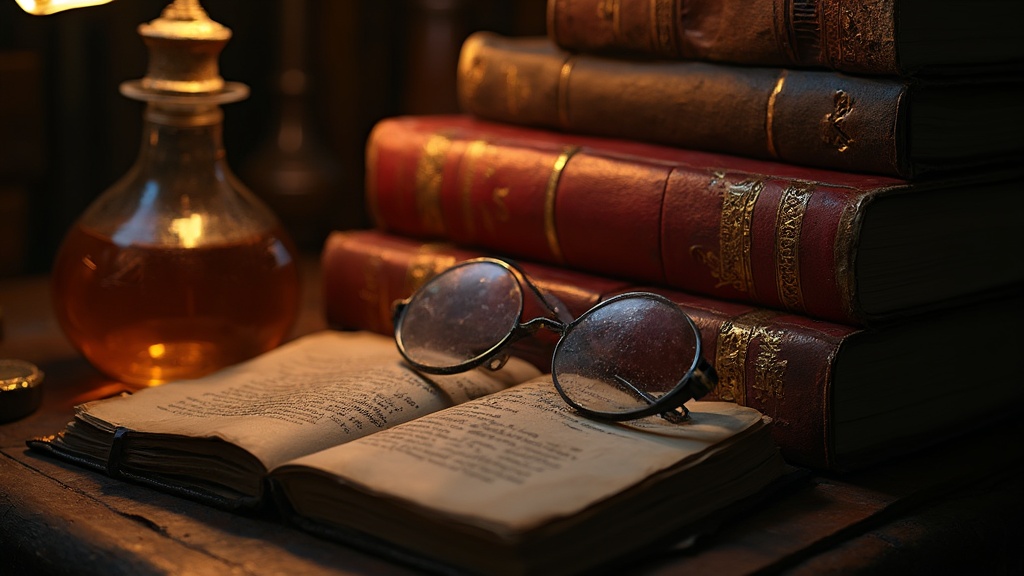
The book in the photograph above? I can smell it from here. Basement musk, dry paper, a hint of leather dressing from a careful owner. She has been well-kept. She is worth the examination.
Happy hunting.
Julian Vane files his dispatches from a drafty Victorian in Providence, Rhode Island, where the scotch is Islay and the spectacles are silver. For technical inquiries or authentication consultations, reach him through the usual channels.