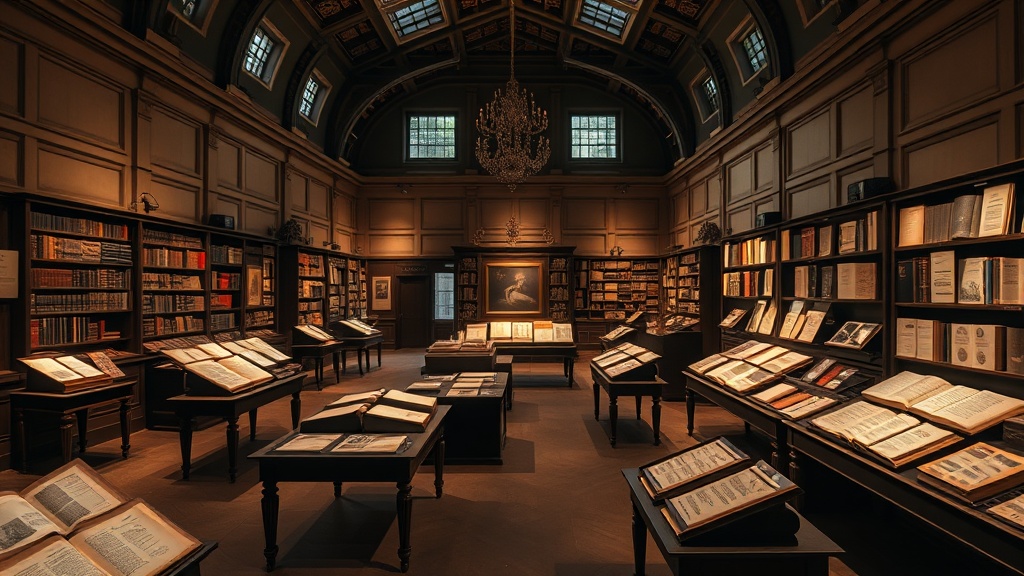
TEFAF Maastricht 2026: A Forensic Guide to the Must‑See Rare Books

Ever felt the rush of a crowded exhibition hall, the scent of old paper, and the whisper of history in your ear? That’s TEFAF Maastricht 2026 for you — a fleeting window where centuries‑old pages sit beside modern collectors, each vying for the next "first state" prize.
As a former investigative journalist turned bibliographic detective, I treat each book like a crime scene. In this guide, I’ll walk you through the fair’s headline pieces, reveal the forensic tricks to separate authentic treasures from polished facsimiles, and give you a roadmap for post‑fair follow‑up.
What is TEFAF and why does it matter to rare‑book collectors?
TEFAF (The European Fine Art Fair) is the premier international showcase for antiquities, fine art, and rare books. Running March 9‑14 in Maastricht, the 2026 edition brings together over 30 dealers specializing in manuscripts, incunabula, and early printed works (Fine Books Magazine). For collectors, the fair is a condensed marketplace where provenance, condition, and price converge in real‑time.
Which rare books are stealing the spotlight this year?
Here are the five most compelling titles I flagged during my rounds:
- Peter Harrington’s Marco Polo manuscript – a 15th‑century copy from the legendary Pierre Bergé library, displayed alongside contemporary city‑scape photography (Michael Hoppen Gallery). Its marginalia offer clues to trade routes that even modern scholars debate.
- De le maraveliose cose del Mondo (1500) – the second Italian edition of Marco Polo’s travels, described by the fair’s press as “one of the rarest printed editions” (TEFAF press). Look for the original wood‑type title page and the distinctive hand‑stamped binding.
- 150‑year‑old “Book of Hours” from Les Enluminures – a lavishly illuminated manuscript highlighted in the fair’s Books of Hours exhibition (Fine Books Magazine). Its vellum edges and gold leaf survive remarkably intact.
- A first‑edition 1830 Book of Mormon – the same copy that fetched $250,000 at a Utah auction earlier this year (Deseret News). The fair’s dealer displayed it as a benchmark for condition grading.
- Rare 15th‑century printed Audubon plates – a perfect case for the color‑plate trap I wrote about last year. Spot the subtle ink‑bleed patterns that betray a later reproduction.
How can I spot a genuine first edition among the fair’s offerings?
My forensic checklist is simple but rigorous:
- Paper provenance: Examine the fiber texture. Early modern rag‑paper feels heavier and retains a faint watermark when held up to light.
- Binding clues: Look for hand‑stitched signatures, original leather tooling, and the absence of modern adhesives. A restored dust jacket will often have a slightly different grain or glue line – see my guide on detecting restored jackets.
- Typographic fingerprints: Early printers left tell‑tale quirks – double‑spacing after punctuation, irregular line justification, or a distinctive type‑size hierarchy. Compare these to documented examples in the Ada Lovelace notes analysis.
- Provenance paperwork: Legitimate dealers will present a chain of custody, often a handwritten ledger or a dated acquisition note. Beware of vague “family heirloom” stories without supporting documentation.
What are the red flags of facsimiles and restorations?
Even the most polished facsimile can betray its true nature:
- Uniform ink saturation: Original print runs show slight variance in ink density; facsimiles often appear too even.
- Modern paper stock: A glossy or acid‑free paper surface is a giveaway.
- Over‑bright colors: Especially on 15th‑century plates, where pigments naturally faded over centuries.
When in doubt, ask the dealer for a book‑club edition forensic tell checklist. If they balk, walk away.
Where can I follow up after the fair?
Most dealers publish post‑fair catalogs within a week. Subscribe to the TEFAF online portal (TEFAF.com) for PDFs and price guides. I’ll be updating my “Spring 2026 Auction Roundup” with any sales that close after the fair.
Takeaway
TEFAF Maastricht 2026 is a rare‑book detective’s playground. Arm yourself with a forensic eye, verify provenance, and don’t let glossy presentations blind you. The next “first state” you acquire could become the cornerstone of your collection – or a costly misstep. Keep the clues close, and the books will speak.