Stop-Press Corrections: Reading the Fingerprints of a Hurried Printer

Most collectors assume the first edition they hold represents a fixed, immutable text—that every copy emerging from the press in 1925 or 1847 carries identical words in identical order. This assumption collapses the moment you examine early printed books with any care. The printing house was a site of constant revision, error, and hurried correction. Printers discovered mistakes mid-run, swapped out type, and created "states"—textual variants that survive as physical evidence of human fallibility. Understanding stop-press corrections isn't arcane bibliographic trivia; it's forensic literacy for anyone who treats books as historical artifacts rather than decorative objects.
What Are Stop-Press Corrections and Why Do They Matter?
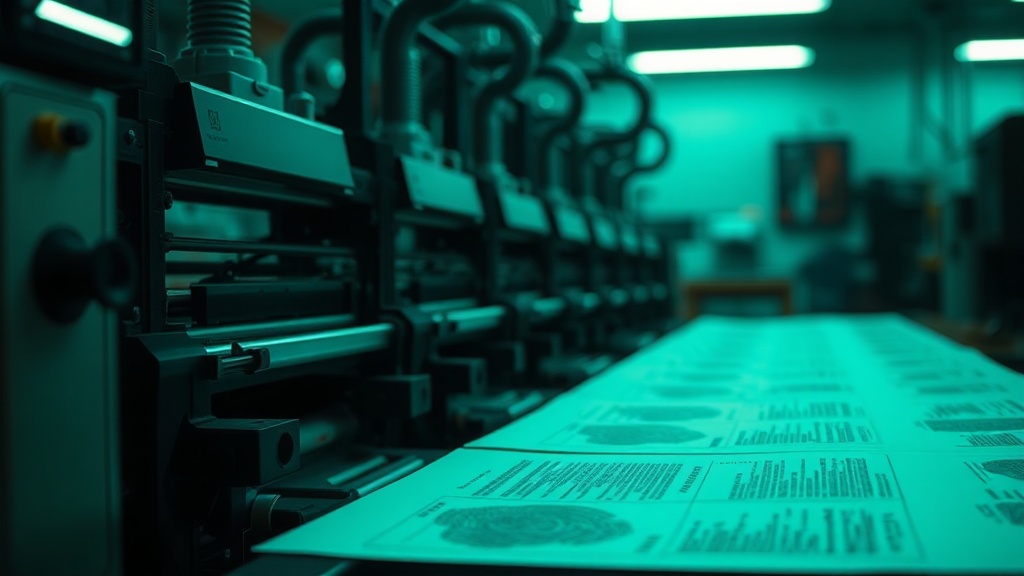
A stop-press correction occurs when a printer, noticing an error during the actual printing of a sheet, halts the press, corrects the type, and resumes production. The result is two distinct "states" of the same sheet—uncorrected and corrected—both legitimate products of the same edition, printed from the same setting of type. The uncorrected sheets weren't discarded (paper was too expensive for that luxury); they were folded, gathered, and bound alongside their corrected siblings.
For collectors, these variants matter enormously. They represent moments of decision frozen in paper—the instant a compositor spotted a transposed line, a wrong date, or an embarrassing omission. The Rare Book School at the University of Virginia teaches that distinguishing between states requires treating each copy as a potential crime scene. You examine every page with suspicion, comparing your copy against bibliographies, against other institutional holdings, against the documentary record of production.
The detective work yields genuine scholarly and market value. When The Great Gatsby first appeared in 1925, Scribner's pressmen caught several errors during the print run. Copies with specific uncorrected errors—"sick in tired" instead of "sick in tired" corrected to "sick and tired"—command premiums not because the mistake is charming but because it represents an earlier, scarcer moment in the book's manufacture. You're not buying a typo; you're buying temporal proximity to the moment of creation.
How Can You Identify Cancellans Leaves in Your Own Collection?
Cancellans leaves represent a more dramatic intervention than simple stop-press corrections. When an error was discovered too late—after the entire sheet had been printed—the printer might produce a completely new leaf (the cancellans) to paste over or substitute for the offending original (the cancellandum). These pasted-in leaves, often detectable by careful examination, betray their origin through subtle physical evidence.
Start with your eyes, then your fingers. A cancellans leaf often shows different paper stock—whiter, perhaps, or with a different watermark. The chain lines (the wire impressions visible when holding early paper to light) may run in a different direction. Most tellingly, the leaf may sit slightly proud of its neighbors, or the gutter margin may show evidence of pasting or sewing through pre-existing holes.
But the most reliable detection method involves textual comparison. Gather your bibliographies—Book Collector, the relevant volume of the Bibliographical Society's publications, or specialized catalogues like those produced by Bauman Rare Books. Look for recorded variants in the specific edition you own. Then examine your copy page by page, word by word, line ending by line ending. The differences can be maddeningly subtle—a comma added, a spelling changed from British to American, a dedication reworded.
Consider the 1813 first edition of Pride and Prejudice. Austen's masterpiece exists in multiple states due to stop-press corrections during its three-volume production. Volume 3, page 284, line 22, shows a particularly famous variant: "philippic" versus "philippic" corrected to the intended "philippic" (a speech of denunciation). Identifying which state you possess requires patience, good light, and access to the bibliographical record. But the satisfaction—knowing exactly when in the production sequence your copy emerged—justifies the effort.
Why Do Some Corrections Create Multiple States While Others Don't?
The bibliographical concept of "state" has precise meaning that collectors often confuse with "issue" or "impression." A state represents any variation within the same edition produced during the same press run, caused by alterations to the type or plates. An issue, by contrast, involves deliberate bibliographical changes—new title pages, different bindings, altered publication information—often designed to dispose of leftover sheets under new pretenses.
Not every correction creates a new state. If a printer caught an error early—on the first few sheets pulled for proofing—the corrected sheets might comprise the vast majority of the edition, with the uncorrected outliers vanishing into statistical insignificance. Conversely, a correction made near the end of a print run might leave most copies in the uncorrected state, making the corrected version the true rarity.
The economics of nineteenth-century publishing determined these ratios. Print runs for first editions often ranged from 500 to 2,000 copies. Paper represented the largest production cost. Stopping the press meant idling workers, cooling the ink, and risking the entire day's output. Printers balanced the severity of the error against the financial loss of interruption. A misspelled author's name? Stop the press immediately. A transposed line in chapter fourteen? Perhaps not worth the disruption.
This calculus explains why some famous corrections created highly desirable variants while others remain bibliographical footnotes. The 1851 first edition of Moby-Dick contains stop-press corrections in multiple gatherings, some affecting significant textual passages. Collectors who understand these mechanics don't just accumulate books; they reconstruct the material conditions of their production, reading the physical evidence as clearly as they read the printed words.
Building a Reference Library for Forensic Bibliography
Identifying stop-press corrections requires tools beyond the naked eye. Every serious collector should maintain a reference library supporting forensic examination: strong transmitted light sources (for watermark detection), high-quality digital calipers (for paper measurement), and—most critically—access to the bibliographical record.
Subscribe to The Book Collector and the publications of the Bibliographical Society of America. These journals publish detailed collations and variant descriptions that serve as your detection manuals. For major authors, acquire the standard bibliographies: Garrison's Melville, Blanck's Bibliography of American Literature, the various Oxford and Cambridge author bibliographies. These massive reference works exist precisely for this purpose—to identify when your copy deviates from the standard description.
Learn to read formulae. Bibliographers describe books using a shorthand system called "collation by gatherings" or "signature collation." The formula "π² A-H⁸ I⁴" tells you exactly how the book was assembled—from preliminary gatherings (π) of two leaves, through gatherings A through H of eight leaves each, to a final gathering I of four leaves. Understanding this language lets you spot irregularities: a gathering of unexpected size, a missing preliminary, a substituted leaf.
Practice on inexpensive material. Buy multiple copies of the same nineteenth-century novel—perhaps three or four cheap editions of Dickens or Trollope. Compare them gathering by gathering, page by page. You'll develop the visual vocabulary necessary for spotting variants: the slight misalignment of a reset line, the telltale impression of a corrected letter standing slightly proud of its neighbors, the ghost of a watermark visible only in raking light.
When Is a Variant Worth Premium Prices?
The marketplace for corrected versus uncorrected states follows no predictable logic. Sometimes the uncorrected state commands higher prices because it represents the "pure" first impression—the book as it initially emerged, errors and all. Sometimes the corrected state prevails because it represents the author's final intention, the text as perfected. The 1611 King James Bible offers a famous case: the "He" Bible (reading "He went into the city" at Ruth 3:15) versus the "She" Bible (corrected to "She went"). Both states command extraordinary prices, but for different collecting constituencies.
More commonly, value correlates with scarcity and significance. An uncorrected state representing perhaps 5% of the total print run—caught and fixed after only a few sheets—carries premium value because genuine rarity attaches to it. A corrected state found in 95% of surviving copies might be bibliographically interesting but commercially negligible.
Significance matters too. A correction changing a date from 1899 to 1900 affects our understanding of publication chronology. A correction fixing a printer's error in a quotation matters less than one restoring words accidentally omitted from the author's manuscript. The most valuable variants—like those in the 1855 first edition of Leaves of Grass—involve textual passages central to the work's meaning, where the corrected state brings us closer to Walt Whitman's actual intention.
The forensic approach treats these variants not as market commodities alone but as physical witnesses to process. Each stop-press correction tells a story of human attention—the compositor who noticed, the foreman who decided, the press that paused and resumed. You're collecting not just books but moments of awareness, caught and preserved in paper and ink.