Shelving the Witness: A Forensic Shelf Check for First Editions

Shelving the Witness: A Forensic Shelf Check for First Editions
I run this check the night before the first big auction weekend: not for the rare 1/4-inch spine flaw, not for provenance, not for the next brag post. I do it for the first rule of collecting: a book can survive for decades only if the room around it wants it to survive.
A first edition is a witness. If you leave a witness in a bad room, you do not get better testimony tomorrow. You get dust, softened spine joints, ink migration, brittle edges, and eventually a postmortem.
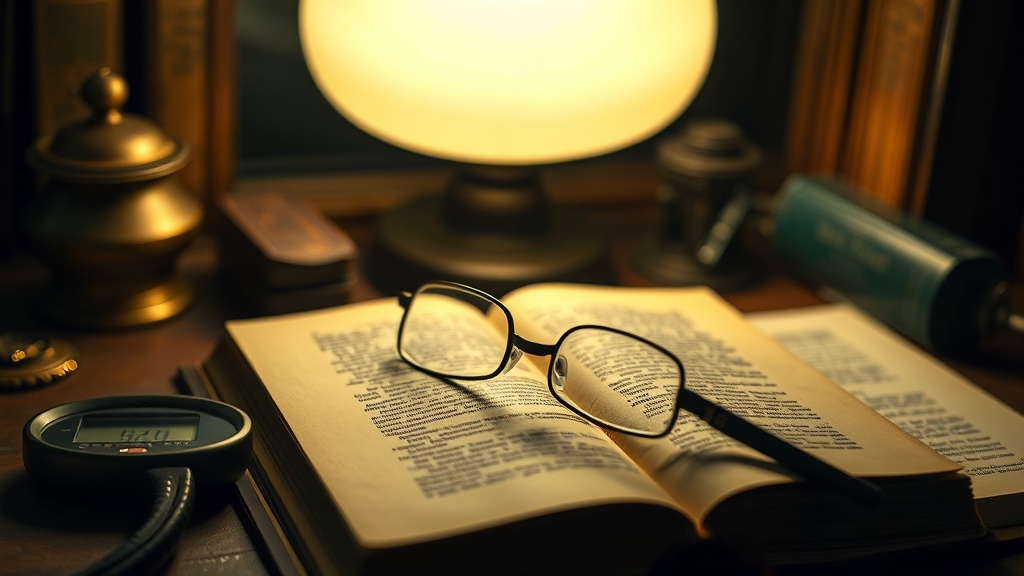
I used to carry a glass of Laphroaig, silver-framed spectacles, and a Moleskine when I wrote this protocol. If you only remember one thing from this article, remember this line: environment is the first buyer and the first seller in any first-edition transaction.
The Shelf Crime Scene: What I Inspect First
When a collector asks me where to display a newly acquired first, my answer is boring and immediate: "Not on the sunny window ledge."
That’s not a style opinion. It is protocol.
From the Library of Congress and practical print-care standards, I use three hard constraints:
- Coolness: room temperature or cooler is preferable.
- Dryness: roughly 30–55% relative humidity is the target zone for long-run stability.
- Light control: no direct or intense light on book surfaces.
If you remember nothing else, remember the first three rules:
- No direct sun.
- No attic heat cycling.
- No damp corner by plumbing.
I call that the environment triad. If a shelf fails the triad, the book fails the next decade.
Why collectors get this wrong
Collectors usually overfocus on the jacket and underfocus on the air. Most mistakes I see are not dramatic thefts or forged signatures. They’re atmospheric neglect.
- The copy looked pristine in daylight and “perfect” in photos.
- It spent years in an office with bright windows and old radiator swings.
- The owner never noticed severe harm until title page foxing, edge lifting, board warping, or that faint mildew smell arrived together in one bad season.
The problem is compounded by one false belief: if it “looks okay now,” it will remain. Paper is lying to you in real time. You must judge trend, not moment.
The first rule: never force handling when the book is loose
If a case is brittle, I stop, support the structure, and inspect for shelf stress before I even open anything.
Practical sequence:
- Check the spine hinge and joint tension with gentle pressure at the crown, not the corners.
- Read the paper at the gutter edge for tension lines or white stress fractures.
- Hold it upright, then flat and compare the sound response: brittle books often crack before they bend.
A lot of people assume gloves are better for rare books. Clean hands are usually better than cotton gloves for routine handling because dry gloves can tear paper fibers. If a copy is fragile, bring in a trained conservator instead of experimenting with handling techniques.
The second rule: jackets are not a museum label, they are active evidence
I am not anti-jacket. I am anti-exposure.
The dust jacket on a collectible first is an evidence-rich layer. It should be handled like a map with a single route line, not a napkin.
- Keep jackets off display for long periods unless they are stable in protected housing.
- Use buffered, lignin-free interleaving when storing jacketed copies for any length of time.
- Never tape, glue, or staple anything directly on the jacket structure.
A jacket should be kept isolated from constant handling. Each flip of the edge is friction. Each abrasion is a scar that an overenthusiastic buyer will pay for with skepticism.
The third rule: isolate volatile books first
Some copies are already carrying internal risk: high-acidic paper, unstable dyes, iron-gall ink issues, weak adhesives.
This is where “supportive enclosures” matter. Acid- and lignin-free folders and boxes are not decorative extras; they are active buffers.
I keep this order in play for anything with visible stress:
- Paper with unstable skin tone shifts + foxing: boxed separately.
- Problematic adhesives or prior restoration: polyester sleeves only if media allows, otherwise consult conservator.
- Acidic companions: don’t stack them against the stable specimen; acids migrate through enclosed micro-environments.
The LOC guidance is explicit about this at least in practical terms: better enclosures, cleaner materials, and isolated storage can prevent one weak item from poisoning the room around it.
The 12-minute nightly check (and yes, make it a habit)
Collections don’t collapse in one night. They drift. My “12-minute check” catches drift before it becomes irreversible:
- Humidity watch (2 min). If you keep data in a logger, check min/max. If RH has been jumping above and below comfort bands, your next 24-hour windows are not stable enough for active display.
- Light audit (2 min). Turn off direct lamp angles toward spines. Move display lights off direct incidence.
- Support audit (2 min). Look for books leaning under weight from top shelves.
- Jacket touchpoint check (2 min). Ensure jackets have no fresh edge wear from repeated flipping.
- Odor check (2 min). If it smells sour, cool this down, dehumidify, and isolate.
- Object list update (2 min). Record what changed. I keep a Moleskine for this because memory does not outgrow paper when the room is cold.
That is my practical baseline. It is simple because good storage isn’t heroic. It is boringly regular.
Display strategy: when to put She on the shelf
I do one hard thing for all clients: if a copy goes on display, it goes for short windows and short windows only.
I recommend cycles, not permanence:
- Short display window: enough for admiration and reading.
- Return to controlled storage: same week, not “until someone has a better room.”
Treat books as specimens that deserve active observation, not décor. A permanently displayed copy ages faster than one that sleeps between checks.
That is the first principle of this discipline: if the specimen is always on show, then you are always in the witness-protection business without the paperwork.
What I do for clients after estate purchases
After a late-night estate buy, I run a triage pass before the book enters a shelf:
- Quarantine any damp-smelling copy for 48 hours.
- Flat support check for the next 24 hours on any item with new edge lift.
- Immediate housing in stable sleeves/boxes for all copies with unstable jackets or active paper stress.
- No restoration attempts at home while structure is unstable; that’s how false “fixed” books get created.
If you bought a promising copy under pressure, do not let the adrenaline of the hunt become the method. Discipline keeps the specimen honest.
One final note from the field
The market rewards visible rarity and ignores context until context collapses.
So yes, your next buyer will admire the title, the price, the point, the inscription. But before every one of those conversations, there is a plain, quiet room with a stable thermometer, a stable humidity strip, and a darkened shelf line.
The bibliography never lies. The bibliography also never lies about this: condition is made in the room where you keep the object, not in the story you tell in your listing.
If you want the copy to arrive at her best at thirty in one year and at ten years old, stop treating display as a lifestyle preference. Treat it as a preservation protocol.
Happy hunting.