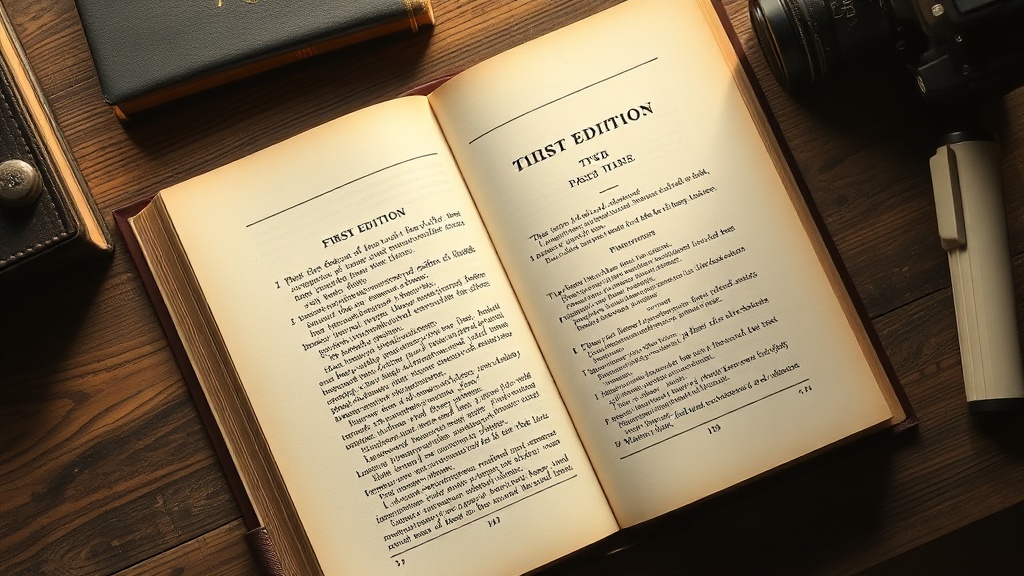
Quick‑Hit Guide: Five Essential Steps to Authenticate a First Edition Before Buying

Ever wondered if that glossy‑bound treasure on the shelf is truly a first edition or just a clever copy? In the fast‑moving world of rare books, a single misstep can cost you thousands. Here’s a five‑step forensic checklist that lets you spot the genuine article in under ten minutes—no pricey lab equipment required.
Why Authentication Matters Before You Pull the Trigger
Collecting first editions is part detective work, part poetry. As a former investigative journalist turned bibliographic sleuth, I’ve seen collectors lose fortunes on “firsts” that were actually later printings. Authenticating early protects your wallet and preserves the integrity of the market.
Step 1: Verify the Title Page Details
The title page is the book’s fingerprint. Look for these tell‑tale clues:
- Publication date: First editions often bear the earliest year listed on the title page. Cross‑check with the publisher’s official records—see the Library of Congress catalog for hard‑to‑find dates.
- Publisher’s imprint: Early imprints may differ in typeface or location. Compare against the Rare Book Hub bibliography for the correct imprint.
- Typographical quirks: First printings often have minor typographical errors that were corrected in later runs. Spot the odd comma or misspelled name?
Step 2: Examine the Dust Jacket (If It Exists)
Dust jackets are deceptive—many later editions reuse the same artwork. Here’s how to tell:
- Check the barcode and price. First editions released before the 1970s rarely have barcodes; a modern barcode can signal a reprint.
- Look for the flap text. Original jackets often feature a specific blurb or review that changed in later editions. Compare with the ABAA’s jacket archive.
- Feel the paper grain. Early jackets use heavier, textured stock. A flimsy, glossy paper usually means a later issue.
Step 3: Scrutinize the Binding and Endpapers
Binding construction is a forensic gold mine:
- Thread‑sewn vs. glued: First editions from the 19th‑century often feature hand‑stitched signatures. Glue‑bound spines are a red flag for later reissues.
- Endpaper watermark: Many publishers used unique watermarks for the first print run. Compare the watermark pattern to reference images on Bibliopolis.
- Cover cloth: Original cloths may have a specific weave or color that later editions mimic but never exactly replicate.
Step 4: Cross‑Check Provenance and Documentation
A solid provenance can be the deciding factor. Ask the seller for:
- Original purchase receipt or auction catalog entry.
- Any previous ownership notes—collectors often annotate the flyleaf.
- Photographs of the book in its original condition, especially if it’s been stored in a climate‑controlled environment.
When in doubt, consult the NYIABF 2026 Forensic Buying Guide for a deeper dive into provenance verification.
Step 5: When to Call a Professional Conservator
Even the most diligent sleuth can miss a subtle point. If you encounter any of the following, it’s time to bring in an expert:
- Unusual paper texture that could indicate a later “reprint on recycled stock.”
- Inconsistent type—especially in the colophon or copyright page.
- Signs of restoration, such as repaired torn pages or re‑glued spines.
Professional conservators can conduct a paper‑quality analysis and even use infrared imaging to reveal hidden alterations.
Takeaway: Your Five‑Step Authentication Cheat Sheet
Before you sign a check, run this quick checklist:
- Confirm title‑page date, imprint, and typographical quirks.
- Inspect dust‑jacket barcode, flap text, and paper grain.
- Examine binding: thread‑sewn signatures, endpaper watermarks, and cloth texture.
- Verify provenance with receipts, catalogs, and prior‑owner notes.
- Escalate to a conservator for any red flags.
Follow these steps, and you’ll walk away with confidence that the edition you’re holding is truly a first—no more costly regrets.
For more forensic tools, see our First‑Edition Care Checklist and the Blockchain Provenance article for cutting‑edge verification methods.
Related Reading
- 2026 Rare Book Market Trends — A macro view of where first‑edition values are heading.
- How to Assess Paper Quality in First Editions — Deep dive into paper diagnostics.
- TEFAF 2026 Forensic Guide — Highlights from the premier rare‑book fair.
Steps
- 1
Verify the title page details
Check publication date, publisher's imprint, and typographical quirks against authoritative records.
- 2
Examine the dust jacket
Look for barcodes, original flap text, and paper grain to confirm authenticity.
- 3
Scrutinize binding and endpapers
Identify thread‑sewn signatures, watermarks, and cloth texture characteristic of first printings.
- 4
Cross‑check provenance and documentation
Obtain original receipts, auction catalogs, and previous ownership notes.
- 5
Consult a professional conservator when needed
Seek expert analysis for unusual paper texture, inconsistent type, or restoration signs.