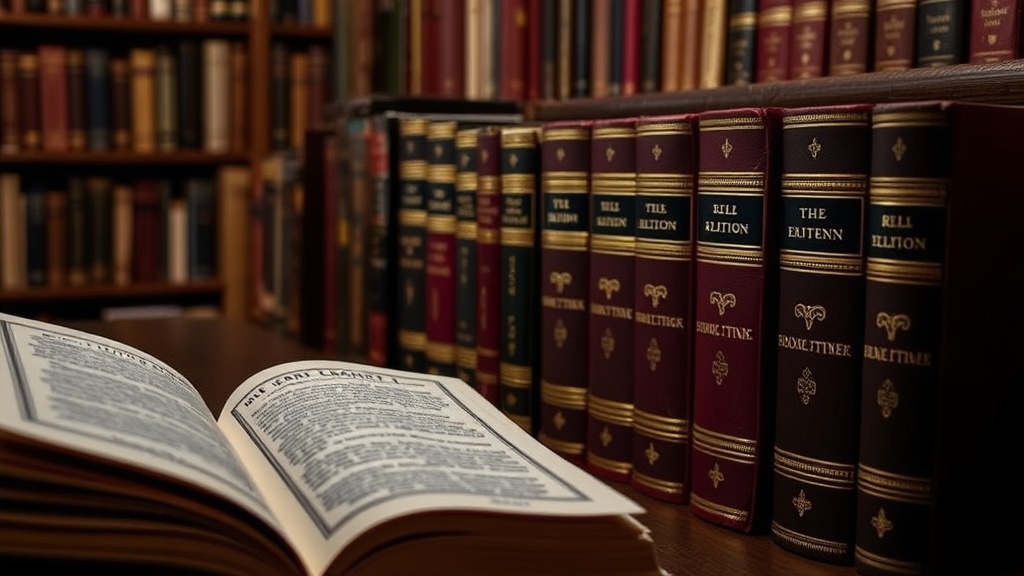
How to Properly Store and Preserve First Edition Books

What This Guide Covers (And Why Your Books Depend On It)
This guide walks through the practical mechanics of book preservation—temperature control, archival materials, handling protocols, and disaster prevention. First editions aren't merely old books. They're physical artifacts with finite lifespans, and every day of improper storage subtracts years from their viability. Whether you're holding a signed The Great Gatsby or a battered first-run On the Road, the same principles apply: paper degrades, bindings dry out, and light doesn't discriminate. The good news? Most damage is preventable with methods that cost less than a single mid-grade collector's piece.
What's the Ideal Temperature and Humidity for First Edition Storage?
Sixty-five degrees Fahrenheit and 35% relative humidity. That's the target—cool, dry, and stable. Paper swells in humidity and contracts in aridity. Do that dance too many times, and the fibers fracture. Mold spores wake up around 70% humidity. Insect activity spikes above 75°F. The math is simple, even if your attic disagrees.
Basements and attics are where books go to die. Basements flood. Attics bake. Both fluctuate wildly with the seasons—expansion, contraction, expansion again—until the binding glue crystallizes and the pages start separating like wet crackers.
Here's the thing: stability matters more than perfection. A constant 72°F at 45% humidity beats a basement that swings between 50°F in winter and 85°F in summer. If you're serious about preservation, invest in a hygrometer (the ThermoPro TP50 runs about $10 and works fine) and check it weekly. Don't guess.
Climate control isn't optional for high-value pieces. A dedicated room, a closet with a small dehumidifier (the Eva-Dry E-333 works well for small spaces), or even sealed archival boxes with silica gel packets—these aren't luxuries. They're insurance.
"Books are not fragile. They're organic. They breathe, they age, they die. The question isn't whether to intervene—it's how much time you're buying."
How Should You Shelve First Editions to Prevent Damage?
Upright, spine out, supported—but not squeezed. Books need neighbors to stay vertical, but cram them too tight and you're asking for torn headcaps and strained hinges when you pull one free.
The vertical position distributes weight evenly across the text block. Lay a book flat with others stacked on top, and you're crushing the spine—a slow, silent compression that flattens raised bands and cracks the shoulder joints. That said, oversized folios and atlases are the exception. Their own weight will tear the hinges if shelved upright. Store them flat, one deep, on a dedicated shelf.
Never—never—shelve books with the spine facing up and the pages hanging down. Gravity pulls the text block away from the casing. Five years of that, and the book opens like a clamshell.
Wood shelving presents its own risks. Fresh wood off-gasses acids. Redwood and oak are particularly aggressive. Line bare wood shelves with archival-quality barrier paper (the University Products acid-free buffered paper works well) or keep books in archival slipcases. Metal shelving is safer—powder-coated steel doesn't react with leather or cloth—but watch for rust in humid environments.
The catch? Most collectors don't have dedicated library space. They're working with IKEA Billy bookcases and converted closets. That's workable. Just keep books away from exterior walls (temperature swings), heat vents (thermal shock), and windows (your enemies: UV light and condensation).
Shelving Best Practices
- Spacing: Leave 1–2 inches of free space at the end of each row for air circulation
- Height: Store tall books on upper shelves—less dust, easier retrieval without bending
- Bookends: Use smooth, wide-faced bookends (the Gaylord Archival steel models are gentle on spines)
- Sagging: If shelves bow, add a center support or redistribute weight—sagging shelves torque bindings
What Materials Actually Protect Books Long-Term?
Archival-quality, acid-free, lignin-free. These aren't marketing terms—they're chemical specifications. Standard paper contains lignin, which breaks down into acid over decades. Acid migrates. It bleeds from a cheap dust jacket protector into the jacket itself, from a cardboard box into the pages pressed against it.
Storage materials break down into categories. Here's what actually works:
| Material | Best For | What to Buy | What to Avoid |
|---|---|---|---|
| Dust Jacket Covers | Protecting illustrated jackets from wear | Clear Mylar (polyester) sleeves, 2-mil or 4-mil | PVC (vinyl)—it yellows and off-gasses |
| Storage Boxes | Books without jackets, extras, or off-shelf storage | Archival drop-front boxes, buffered board | Cardboard, wood boxes, plastic bins |
| Wrapping Paper | Interleaving, wrapping for transport | Unbuffered tissue for photos/art, buffered for general | Newsprint, brown craft paper (high acid) |
| Sleeves/Envelopes | Ephemera, letters, photos found in books | Polyester L-sleeves, acid-free envelopes | Standard office supplies, "magnetic" photo albums |
Worth noting: Mylar dust jacket covers from Brodart are the industry standard. Buy the adjustable fold-lock style, not the adhesive-backed versions—glue fails, and adhesive residue stains permanently. Cut covers slightly oversized. A jacket that rubs against the interior of a tight cover will abrade at the corners.
For rare volumes, custom clamshell boxes (also called "drop-spine" or "pizza boxes" in the trade) provide the gold standard. They buffer the book from environmental shifts, block light, and prevent shelf wear. Expect to pay $75–$200 per box from specialty binders like Hollinger Metal Edge or your local conservation binder. For a $5,000 first edition, that's cheap protection.
How Do You Handle First Editions Without Causing Damage?
Clean hands, full support, no forcing. Oils from skin transfer to paper and oxidize—those brown thumbprints on old pages aren't stains, they're chemical reactions. Wash hands before handling. No lotion, no sanitizer residue.
Opening a book properly sounds obvious until you watch someone crack the spine on a tight 1920s novel. Don't pull from the headcap (the top of the spine). Don't open flat—180 degrees puts maximum torque on the hinges. Support the text block from beneath when reading. Use a book cradle or rolled towels to maintain a gentle angle.
Dust jackets tear at the folds. Flaps get creased. When removing a jacketed book from shelf, grip the book and jacket together as one unit, or remove the jacket first and store it separately in a Mylar sleeve. Mixed advice exists here—some collectors prefer jackets on, protected; others store jackets flat in archival folders and read copies without them. Both approaches are valid. Inconsistency isn't.
For books with fragile bindings, there's a technique called "reading from the right"—opening only the right-hand page while supporting the left side, then switching. It looks awkward. It preserves first-edition poetry collections that would otherwise separate at the signature stitching.
What About Light, Pests, and Disasters?
Light is a solvent. UV radiation breaks paper fibers and fades cloth and leather—irreversibly. Incandescent bulbs are safer than fluorescents (which emit UV). LED is safest of all. Keep display pieces away from direct sunlight, and rotate them. That signed Faulkner looks magnificent in the glass-front case, but six months of gallery lighting will bleach the spine. Worth noting: closed cabinets block 90% of ambient light.
Insects aren't random visitors. Silverfish seek starch-based sizing in paper. Carpet beetle larvae eat leather. Booklice (psocids) indicate humidity problems. If you see one, you've got hundreds. Freeze treatment works for infestations—seal the book in plastic, freeze at 0°F for 72 hours, let it return to room temperature slowly while still sealed (prevents condensation). It's drastic but effective.
Disaster planning is the part nobody does until the pipe bursts. Keep a list. Photograph your collection for insurance. Know which pieces need immediate freezing if wet (before mold sets in—48 hours is your window). Have contact information for a conservation specialist before you need it. The Conservation OnLine resources from Stanford provide emergency salvage protocols.
Quick-Reference: Environmental Threats
- Light: Keep below 50 lux for rare materials; use UV-filtering glass in display cases
- Temperature: Target 60–70°F; never exceed 75°F for storage
- Humidity: 30–50% RH; use silica gel or dehumidifiers in problem areas
- Pollution: Avoid proximity to fresh paint, cleaning chemicals, or unsealed wood
- Water: Store minimum 6 inches off floor; avoid plumbing walls
That said, perfect preservation is a fantasy. Books are meant to be read. The goal isn't museum stasis—it's controlled aging. A well-preserved first edition should look like a book that was loved carefully, not one that was entombed.
The detective work of collecting doesn't end at acquisition. Every day of ownership is another day of stewardship. Temperature logs, condition notes, the slight adjustment of a leaning row—these small acts compound across decades. Your collection will outlast you. The question is what condition you'll pass it forward in.
Steps
- 1
Choose the Right Storage Environment
- 2
Protect Dust Jackets with Mylar Covers
- 3
Handle and Shelve Books Properly