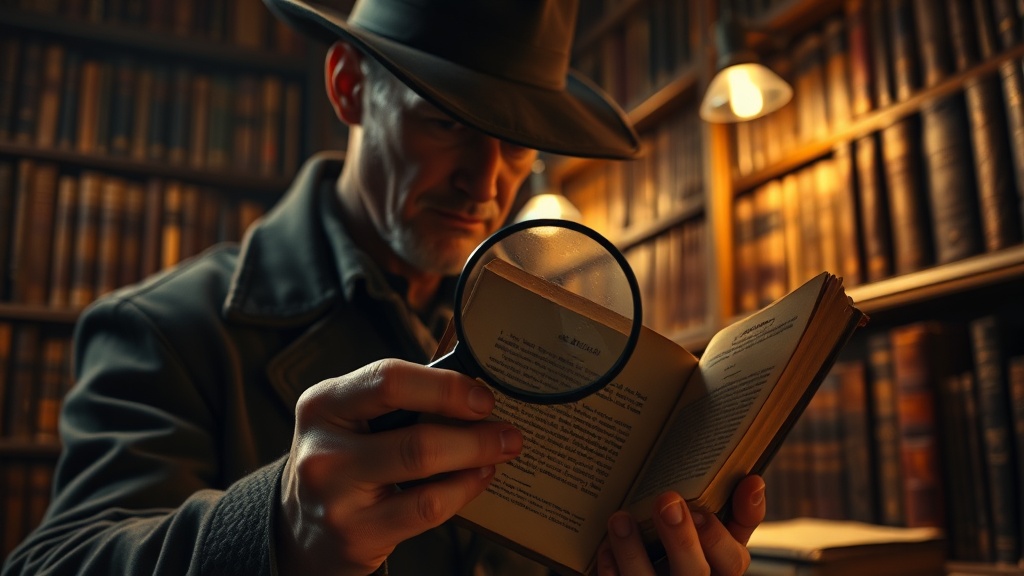
Detective’s Toolkit: 7 Essential Tools for Authenticating First Editions

Hook: Ever held a first edition that felt too perfect to be real? I’ve stared at glossy dust jackets and flawless bindings only to discover a clever forgery hiding in plain sight.
Context: In the forensic world of rare books, the right tools can mean the difference between a priceless treasure and a costly mistake. Below, I break down the seven pieces of equipment I rely on every time I step into a dealer’s loft or an estate sale.
What’s the first tool every bibliographic detective should own?
The magnifying glass is more than a novelty. A 10×, achromatic lens reveals paper texture, ink feathering, and subtle watermark patterns that are invisible to the naked eye. Pair it with a portable light source to avoid shadows.
How does ultraviolet (UV) light expose hidden alterations?
A handheld UV lamp (365 nm) highlights fluorescent inks, old repair tape, and modern synthetic coatings. When I shine UV on a dust jacket, a restored glue line glows bright green – a dead giveaway of a recent repair.
Which portable device can verify the paper’s composition?
The paper‑analysis kit includes a simple pH test strip and a fiber‑optic microscope. A pH below 5 often signals acidic wood‑pulp paper typical of post‑1910 printings, whereas true first‑state copies from the 19s‑30s sit near neutral.
Why is a digital microscope indispensable?
Modern 20‑megapixel USB microscopes give 200× magnification and can capture high‑resolution images for later comparison. I use them to examine the gutter margin for tell‑tale wear patterns, as discussed in The Gutter Margin.
Can a spectrometer help detect ink forgery?
A handheld Raman spectrometer reads the chemical composition of ink without sampling. Early‑20th‑century iron‑gall ink shows a distinct spectral signature that modern pigment‑based inks lack.
What role does a calibrated scale play in authentication?
Weight matters. First‑state copies often weigh slightly more due to heavier stock. A digital scale accurate to 0.1 g can flag a lightweight replica. Cross‑reference your measurements with the bibliographic data in the copyright page record.
How does blockchain verification complement physical tools?
While not a physical instrument, a blockchain provenance ledger provides an immutable record of ownership. I reference the recent Blockchain and the Book post for a primer on integrating digital certificates with traditional forensic methods.
Takeaway
Armed with a magnifier, UV lamp, paper‑analysis kit, digital microscope, spectrometer, calibrated scale, and a blockchain ledger, you’ll approach each first edition with the confidence of a seasoned investigator. The next time a dealer offers you a “pristine” copy, run these checks first – your wallet (and your collection) will thank you.
Related Reading
- The Invisible Mend: Detecting Restored Dust Jackets – A deep dive into jacket restoration tricks.
- The Copyright Page as Crime Scene – How to read the legal breadcrumb trail.
- Foxed, Faded, or Fabricated? – Spotting moisture damage and fake brown spots.
Happy hunting, and may every page you turn tell a true story.