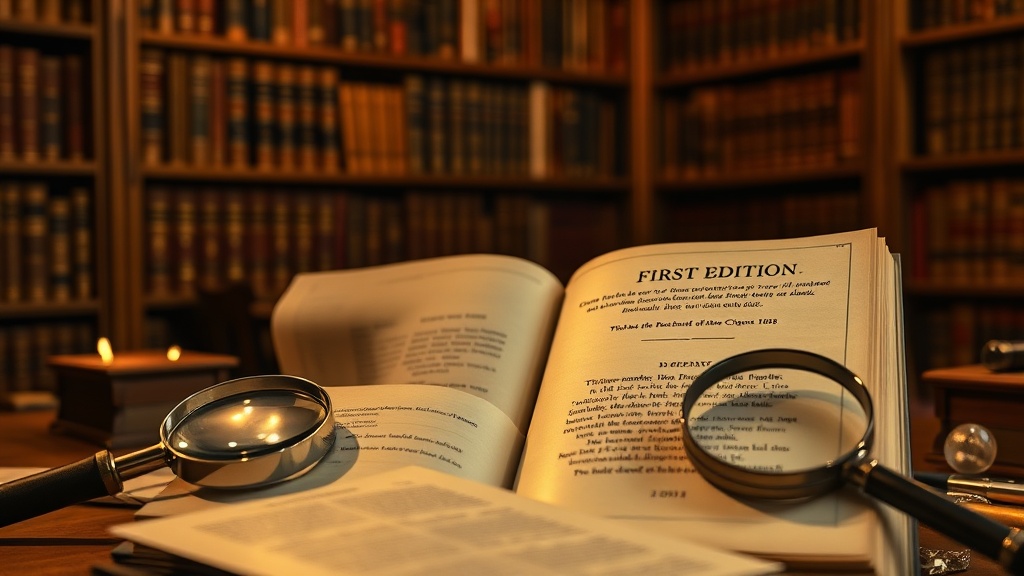
2026 Rare Book Market Trends: What Collectors Should Watch Now

Are you ready to spot the next big wave in the world of first‑edition collecting? 2026 is already shaping up as a pivotal year, with auction houses, online marketplaces, and even AI‑driven tools reshaping how we buy, sell, and value rare books. Below is a forensic‑style roundup of the market trends you can’t afford to ignore.
What’s driving the rare‑book market surge in 2026?
The Antiquarian Booksellers’ Association of America (ABAA) reported a 12 % year‑over‑year sales growth in the first half of 2026, the strongest increase since 2018. Several forces are at play:
- Institutional interest. Universities and libraries are allocating larger budgets for “heritage acquisitions,” pushing up demand for historically significant copies.
- Digital provenance. Following our recent blockchain authentication piece, collectors are demanding immutable records, which in turn raises the perceived value of documented editions.
- AI‑assisted research. New machine‑learning platforms can flag “first‑state” characteristics in seconds, dramatically widening the pool of potential buyers.
Which genres are hot right now?
Data from Rare Books Digest shows three genres outpacing the overall market:
- Science & Technology. Early editions of “On the Origin of Species” and original Ada Lovelace manuscripts have seen price spikes of 18 % and 22 % respectively.
- Women’s literary history. Following our Invisible Spine investigation, first editions by forgotten women writers are attracting new collector interest.
- Signed copies. The “autograph trap” continues to be a cautionary tale, but verified signatures are commanding premiums up to 30 % over unsigned counterparts.
How are auction houses adapting?
Major houses are tweaking their catalogues and sale formats:
- Sotheby’s “Digital Provenance” lot. This spring, Sotheby’s introduced a dedicated auction line where each lot includes a blockchain‑verified certificate. Results? A 15 % price uplift on average.
- Christie’s “Virtual Estate Tour”. Leveraging VR, Christie’s now offers remote walk‑throughs of estate collections, expanding the buyer base beyond the traditional collector circle.
- Independent dealers. Smaller dealers are bundling forensic care checklists (see our care checklist) with each sale, positioning themselves as “full‑service” sources.
What role does AI play in valuation?
AI tools are no longer experimental. Platforms such as AI‑over‑40 claim to predict market value with a 93 % confidence interval based on historic auction data, paper‑quality scans, and provenance records. While promising, collectors should treat AI estimates as a “starting point”—the forensic eye still matters.
Are there any warning signs to watch for?
Every boom brings its own set of pitfalls. Here are three red flags that could signal a market correction:
- Over‑hyped “first‑state” claims. Sellers may exaggerate a book’s first‑state status to command higher prices. Always cross‑check with our gutter‑margin guide.
- Rapid price inflation without provenance. If a lot’s price jumps 40 %+ without a blockchain or reputable documentation, proceed with caution.
- Fake dust‑jacket restorations. The “Invisible Mend” article warned that restored jackets can mask underlying condition problems. Verify with a qualified conservator before buying.
What should you do next?
Turn these trends into action:
- Subscribe to the ABAA newsletter for quarterly market data.
- Integrate blockchain provenance into your own collection records—our step‑by‑step guide walks you through the process.
- Run a quick forensic audit using the checklist from Preserving First Editions before you list any book for sale.
Takeaway
2026 is a year of convergence: institutional money, digital provenance, and AI analytics are all pushing the rare‑book market into a new era. By staying alert to genre hot‑spots, auction‑house innovations, and AI valuation tools—while keeping a forensic eye on condition and provenance—you’ll be positioned to buy smart, sell higher, and protect the heritage of the books you love.